Profile URL: https://hdl.handle.net/20.500.13091/11911
Job Title:Prof. Dr.
Email Address:gtezel@ktun.edu.tr
Main Affiliation:10.01. Department of Computer Engineering
Status: Current Staff
ORCID: 0000-0003-1698-0106
Scopus ID: 23393643600
YÖK Akademik: FFBD593E75AABC45
Google Scholar: _lS4CacAAAAJ
Web of Science ID: IVH-8315-2023
Name Variants:
Tezel, Gulay
17 results
Scholarly Output Search Results
Now showing 1 - 10 of 17
Master Thesis Moora Yöntemi ile Acil Kan Bağışlayıcı Arama Sistemi(Konya Teknik Üniversitesi, 2019) Kaya, Cihan; Tezel, GülayKan, insanın yaşamsal fonksiyonlarının devam etmesinde hayati bir öneme sahiptir. Kaza, ameliyat ve hastalık gibi durumlarda hastanın acil kana ihtiyacı olabilmektedir. Bu gibi acil durumlar nedeniyle, ilgili kan grubuna sahip bireylere ulaşabilmek için günümüzde radyo, televizyon, web siteleri gibi araçlar kullanılmaktadır. Ancak bu araçlar aracılığıyla uygun donöre ulaşmak uzun zaman alabilmektedir. Acil durumlarda zaman oldukça önemlidir. Bu nedenle uygun kan grubuna sahip ve sağlık kuruluşuna yakın olan kişilere, hızlı şekilde ulaşılması gerekmektedir. Bu tezde, acil durumlarda sağlık kuruluşuna yakın ve uygun donörlere hızlı bir şekilde ulaşılarak kan verecekleri yerlere yönlendirilmesi hedeflenmiştir. Kan grubu ve donörlerin sağlık kuruluşuna uzaklık mesafesi, sağlık kurumu tarafından belirlenmekte ve acil kan duyurusu, kuruluşun belirlediği ölçütlere uyan tüm donörlere bildirim olarak gönderilmektedir. Bu çalışmada, sağlık kuruluşları duyuru girerek donörlere bildirim olarak ulaşabilmektedir. Çalışmanın sahip olduğu bu nitelik, literatüre sunduğu katkıları arttırdığı gibi konuya ilişkin benzer çalışmalara da öncü olacak nitelikleri taşımaktadır. Çalışma kapsamında bağışçı seçiminin gerçekleştirilmesinde Moora yönteminden yararlanılmıştır ve donörün sağlık kuruluşuna olan uzaklığı kadar diğer kriterlerin de seçimi etkilediği görülmüştür. Bu çalışma ile birlikte sağlık kuruluşları, hastalar ve yakınlarına da kazanımlar sağlanması amaçlanmaktadır.Article Citation - WoS: 2Apneic Events Detection Using Different Features of Airflow Signals(MEHRAN UNIV ENGINEERING & TECHNOLOGY, 2019-01-01) Göğüş, Fatma Zehra; Tezel, GülayApneic-event based sleep disorders are very common and affect greatly the daily life of people. However, diagnosis of these disorders by detecting apneic events are very difficult. Studies show that analyzes of airflow signals are effective in diagnosis of apneic-event based sleep disorders. According to these studies, diagnosis can be performed by detecting the apneic episodes of the airflow signals. This work deals with detection of apneic episodes on airflow signals belonging to Apnea-ECG (Electrocardiogram) and MIT (Massachusetts Institute of Technology) BIH (Bastons's Beth Isreal Hospital) databases. In order to accomplish this task, three representative feature sets namely classic feature set, amplitude feature set and descriptive model feature set were created. The performance of these feature sets were evaluated individually and in combination with the aid of the random forest classifier to detect apneic episodes. Moreover, effective features were selected by OneR Attribute Eval Feature Selection Algorithm to obtain higher performance. Selected 28 features for Apnea-ECG database and 31 features for MIT-BIH database from 54 features were applied to classifier to compare achievements. As a result, the highest classification accuracies were obtained with the usage of effective features as 96.21% for Apnea-ECG database and 92.23% for MIT-BIH database. Kappa values are also quite good (91.80 and 81.96%) and support the classification accuracies for both databases, too. The results of the study are quite promising for determining apneic events on a minute-by-minute basis.Article Etkin Eeg Özellikleri Çıkarılarak Arousal Tespiti(2020-10-01) Erol, Gizemnur; Göğüş, Fatma Zehra; Tezel, Gülay; Doğan, Gizemnur Erol; Solak, Fatma ZehraSon zamanlarda toplumun en önemli problemlerinden biri olan uyku bozuklukları, bireylerin sağlığını ve yaşam kalitesini ciddi şekilde etkilemektedir. Uykusuzluk (Insomnia), narkolepsi, uyku apnesi ve huzursuz bacak sendromu gibi birçok uyku bozukluklarının neden olduğu rahatsızlıklar vardır. Uyku bozukluklarına sebep olan ana faktör ise bireyin uyku anındaki uyanma ile sonuçlanamayan, uyku kalitesini düşüren uyku kesintileridir. Arousal diğer bir adı ile uyanayazma geçici olan bu kesintilerdir ve bir beyin dalga (Elektroansefalogram -EEG) aktivitesinin paternindeki ani değişikliği temsil etmektedir. Arousal tespiti genellikle EEG verileri kullanılarak Amerikan Uyku Tıbbı Akademisi (American Academy of Sleep Medicine-AASM) tarafından belirlenen kriterlere göre yapılmaktadır. Bu çalışmada amaç, AASM tarafından belirlenen kriterler doğrultusunda EEG sinyalleri vasıtasıyla hasta bireylerdeki arousalların tespitidir. Bu amaç doğrultusunda, öncelikle, çalışmaya dahil edilen 5 hasta bireyin tek kanallı (C3/A2) EEG sinyallerine sırasıyla filtreleme, normalizasyon ve segmantasyon önişlemleri uygulanmıştır. Daha sonra Spektral Güç Yoğunluğu (Power Spectral Density-PSD) ve Ayrık Dalgacık Dönüşümü (Discrete Wavelet Transform-DWT) yöntemleri ile gerçekleştirilen özellik çıkarma süreci sayesinde, EEG sinyal segmentlerine ait 2 özellik seti ve bu özellik setlerinin birleştirilmesiyle 3. özellik seti oluşturulmuştur. Ardından oluşturulan 3 özellik seti üzerine Sarmal Alt Küme Değerlendirme (Wrapper Subset Evaluation-WSE) özellik seçme yöntemi uygulanarak etkin özellikler belirlenmiştir. Nihai olarak belirlenen özelliklerin Yapay Sinir Ağları (YSA) ve Rasgele Orman (RO) algoritmaları tarafından sınıflandırılmaları ile arousal içeren EEG segmentleri tespit edilmiştir. Gerçekleştirilen bu çalışmaların beraberinde EEG sinyal kayıtlarından başka hiçbir PSG sinyal kaydına ihtiyaç duymadan, yalnızca tek kanallı EEG sinyalleri ile oldukça başarılı sonuçlar elde edildiği tespit edilmiştir. Çalışma sonucunda ise Özellik Seti 3’ün etkin özellikleri ve YSA ile en yüksek doğruluk oranı %99.05 olarak elde edilmiştir.Article ANN Modelling for Predicting the Water Absorption of Composites with Waste Plastic Pyrolysis Char Fillers(2018) Tezel, Gülay; Uymaz, Sait Ali; Yel, EsraWaste material was fragmented into gas, liquid and solid fractions by pyrolysis. Recently the solid fraction (char) has been used as filler in epoxy composites. Type and properties of filler affect water absorption of epoxy composites. A recent water absorption database (of 1512 data) has been obtained experimentally. Accordingly, type of pyrolysed plastic, waste pre–washing, pyrolysis temperature, additive dosage and water exposure time were input parameters in the estimation model developed with multilayer perceptron artificial neural network (MLP ANN) to predict the absorbed water quantity as output. Four datasets were derived with data preprocessing. Among all the configurations worked up, 0.991 training and 0.986 testing R² were attained as the highest R² values under conditions including 2e4 iterations, lr 0.04, mc 0.9, first hidden layer of 22 nodes, and second hidden layer of 15 nodes. The R² value attained in the optimum configuration and the average R² attained via 5-fold cross-validation are close to each other for both training and test. The established model will help users to predict the quantity of water that absorbed upon exposure. This will give idea about the availability of that composite for using it for particular purposes.Article Citation - WoS: 4Citation - Scopus: 5Identification of Full-Night Sleep Parameters Using Morphological Features of Ecg Signals: a Practical Alternative To Eeg and Eog Signals(Elsevier Sci Ltd, 2024-02-01) Yücelbaş, Şule; Yücelbaş, Cüneyt; Tezel, Gülay; Özsen, Seral; Yosunkaya, ŞebnemElectroencephalogram (EEG) signals, which are among the most important recordings used in Polysomnography for sleep staging, are more challenging and demanding than electrocardiography (ECG) signals, both in terms of acquisition and interpretation. When examining the studies of other researchers on sleep parameters in the literature, it is evident that EEG signals are predominantly used for determining arousal (AR), K-complex (Kc), and sleep spindle (Ss) parameters. Furthermore, it is understood that electrooculography (EOG) signals are employed for detecting slow eye movements (SEM) and rapid eye movements (REM) parameters.This study is a continuation of our previous research, where we used only EEG signals for Kc and Ss detection. In this study, an approach that includes ECG signals in the determination of sleep parameters to bring practicality to sleep staging studies was adopted. For this purpose, firstly, 16 morphological features were extracted from ECG recordings taken from a total of 24 subjects after various preprocessing steps. Subsequently, these data were used to work on the detection of five different sleep parameters: AR, Kc, Ss, SEM, and REM, using the Random Subspace (RaSE) ensemble learning algorithm. The results were calculated according to various statistical criteria and a classification accuracy of over 78 % was obtained in all parameters. As a result, the sleep parameters that could be determined most successfully using the ECG signal were SEM and arousal, respectively. In addition, feature elimination was performed for these datasets using Symmetric Uncertainty (SU) ranking. As a result of the reclassification process using 9 and 12 features, the effectiveness of which was determined for both datasets, respectively, significant increases were observed in the performance outputs. Experimental results have shown that ECG signals can be used as an alternative to EEG and EOG signals in the determination of full-night sleep parameters.Other Automatic Sleep Stage Classification for the Osa Patients with Feature Mining(2022) Tezel, Gülay; Küçüktürk, Serkan; Koca, Yasin; Vatansev, Hülya; Özşen, Seral; Solak, Fatma ZehraArticle Classification of Sleep Stages Using Psg Recording Signals(2020-10-05) Koca, Yasin; Özşen, Seral; Göğüş, Fatma Zehra; Tezel, Gülay; Küççüktürk, Serkan; Vatansev, HülyaAutomatic sleep staging is aimed within the scope of this paper. Sleep staging is a study by a sleep specialist. Since this process takes quite a long time and sleep is a method based on the knowledge and experience, it is inevitable for each person to show different results. For this, an automatic sleep staging method has been introduced. In the study, EEG (Electroencephalogram), EOG (Electrooculogram), EMG (Electromyogram) data recorded by PSG (Polysomnography) device for seven patients in Necmettin Erbakan University sleep laboratory were used. 81 different features were taken from the data in time and frequency environment. Also, PCA (Principal component analysis) and SFS (Sequential forward selection) feature selection methods were used. The classification success of the sleep phases in different machine learning methods was measured by using the received features. Linear D. (Linear Discriminant Analysis), Cubic SVM (Support vector machine), Weighted kNN (k nearest neighbor), Bagged Trees, ANN (Artificial neural network) were used as classifiers. System success was achieved with a 5 fold cross-validation method. Accuracy rates obtained were respectively 55.6%, 65.8%, 67%, 72.1%, and 69.1%.Article Citation - WoS: 6Citation - Scopus: 6Identification of Apnea-Hypopnea Index Subgroups Based on Multifractal Detrended Fluctuation Analysis and Nasal Cannula Airflow Signals(INT INFORMATION & ENGINEERING TECHNOLOGY ASSOC, 2020-04-30) Göğüş, Fatma Zehra; Tezel, Gülay; Özşen, Seral; Küççüktürk, Serkan; Vatansev, Hülya; Koca, YasinThe diagnosis of obstructive sleep apnea hypopnea syndrome (OSASH) and making decision of treatment necessity with positive airway pressure (PAP) therapy are time consuming and costly processes. There were different approaches in literature to accomplish these processes successfully and as soon as possible by using physiological signals with selected feature extraction and machine learning techniques. To reach fastest and true result, selection of optimal physiological signal(s), feature extraction and learning techniques is important. This study aimed to identify apnea hypopnea index (AHI) subgroups of 120 subjects and thus diagnose of OSASH and determine the need for PAP therapy by applying Multifractal Detrended Fluctuation Analysis (MDFA) as a feature extraction technique to only single channel nasal cannula airflow signals. After the extracted features from airflow signals with MDFA were gone through feature selection phase, the selected features were evaluated in Random Forest classifier. With the implementation of all processes, OSAHS patients were discriminated from healthy subjects with 95.83% accuracy, 96.88% sensitivity and 93.75% specificity. 93.75% sensitivities and 93.75%, 100% and 96.88% specificities were obtained for 15 <= AHI (PAP therapy necessary), 5 <= AHI<15 (require additional information for PAP therapy decision) and AHI <5 (not require PAP therapy) subgroups, respectively.Article Citation - WoS: 5Citation - Scopus: 7Performance Prediction Modeling of Andesite Processing Wastewater Physicochemical Treatment Via Artificial Neural Network(SPRINGER HEIDELBERG, 2020-09-18) Yel, Esra; Önen, Vildan; Tezel, Gülay; Yılmaztürk, DeryaA holistic approach has been introduced on the treatment of andesite marble processing wastewater. The treatment was implemented by using coagulants, flocculants, and minerals. Dosage, mixing time, settling time (ST), mixing speed (MS), and pH were optimized. Up to 99% turbidity removal was achieved by using Alum, FeCl3, PACl, and 40% cationic flocculant under optimized conditions of each. Among the minerals, pumice resulted in 81% turbidity removal efficiency in a much shorter duration as compared with the natural settling conditions. The obtained experimental data was used in the model established with Artificial Neural Network (ANN)-MLP for the prediction of treatment performance (final NTU). Feature selection was performed by using statistical correlations between each experimental parameter and final NTU. ST and MS were determined as the non-correlated parameters with final NTU. The model was integrated into feature selection approach upon establishing three scenarios with datasets: NFS was the whole experimental data consisting of all variables; FS1 was the dataset without ST and dataset FS2 was built up by removing both ST and MS. It was indicated that, when using chemical coagulants, there is no need to study the effects of ST to improve treatment performance, whereas, when using flocculants, both ST and MS has no influence on the treatment performance, so there is no need to perform extra experiments for these variables. Duration of training processes of modeling for all datasets was changing in range of 45-60 s. ANN configuration with two hidden layers was the best model structure, and ST was the parameter which had minimum influence on the treatment performance. The treatment and modeling approaches suggested in this study will be useful to give practical answers to the facility.Master Thesis Öğrenme Yönetim Sistemi Çevrimiçi Sınavlarında Yüz Tanıma ve Göz Hareketleri Takibi ile Usulsüzlük Tespiti(Konya Teknik Üniversitesi, 2024) Akyayla, İbrahi̇m; Tezel, GülaySon yıllarda, uzaktan eğitim, küreselleşen dünyada teknolojinin yükselmesi ve pandeminin de etkisiyle hızla yaygınlaşmıştır. Eğitim öğretim faaliyetlerinin dijital ortama taşınmasıyla da uzaktan eğitimle ilgili çeşitli gereksinimler ortaya çıkmıştır. Bu gereksinimlerden en önemlileri, uzaktan eğitimde kimlik doğrulama işlemi, güvenlik ve adil bir ölçme değerlendirmenin yapılmasıdır. Bu çalışmada, OKİNAR olarak adlandırılmış olan ve bu tez kapsamında geliştirilen uzaktan eğitim sistemi (Learning Management System-LMS) ile bu gereksinimlerin karşılanması hedeflenmiştir. Bu sistemde, öğrencilerin eğitim kurumuna kaydı yapılırken diğer bilgileri yanında yüz görüntüleri de LMS sistemine eklenmektedir. LMS sisteminde, öğrencilerin sınavlarına başlamadan önce kameralarını açarak eğitim kurumu tarafından tanımlanmış sınavlara katılabildikleri video konferans odaları bulunmaktadır. Bu sistemde, ayrıca, sınav güvenliğinin sağlanabilmesi için sınav sürecinde kameradan görüntüleri video dosyası olarak kaydedilmektedir. Kaydedilen videolarda katılımcıların kimlik doğrulaması yapıldıktan sonra, ekran dışındaki yerlere baktığı yönleri analiz edilerek, sınavda usulsüzlük yapma ihtimali bulunan katılımcıların listesi çıkartılmaktadır. Diğer bir ifadeyle, bu çalışmada yüz tanıma teknolojisi ile sınavda usulsüzlük tespitini kolaylaştıracak bir çözüm geliştirilmiştir. Bu listenin online sınavlarda usulsüzlük yaparken, gözden kaçan durumları yeniden değerlendirmeye katkı sağlayacağı, çok katılımcının olduğu sınavlarda takibin kolaylaşacağı varsayılmıştır. Geliştirilen bu sistem ile, yapılan denemeler sonucunda 250 öğrenciden 234 tanesinin üsulsüzlük yapmadığı, 16 öğrencinin ekran dışındaki alanlar ile ilgilendiği, 16 öğrenciden 9 unun usulsüzlük yaptığı, 7 öğrencinin değerlendirmeye uygun pozisyon almadığı tespit edilmiştir.
Research Topics
Domains
Life SciencesPhysical SciencesHealth Sciences
Fields
NeuroscienceComputer ScienceMedicineBiochemistry, Genetics and Molecular Biology
Subfields
Cognitive NeuroscienceSignal ProcessingCardiology and Cardiovascular MedicinePhysiologyArtificial IntelligenceMolecular Biology
Specific Research Areas
EEG and Brain-Computer Interfaces
Blind Source Separation Techniques
ECG Monitoring and Analysis
Obstructive Sleep Apnea Research
Neural Networks and Applications
Machine Learning in Bioinformatics
Sustainable Development Goals
 3
GOOD HEALTH AND WELL-BEING
1
Research Products
 6
CLEAN WATER AND SANITATION
1
Research Products

Documents
34
Citations
914
h-index
13

Documents
27
Citations
579
Publication Collaboration
| Affiliation Name | Count |
|---|---|
| Selçuk University | 29 |
| Necmettin Erbakan University | 21 |
| Konya Technical University | 15 |
| Ankara University | 3 |
| Hakkari University | 2 |
1 / 3
Data obtained from OpenAlex
| Journal | Count |
|---|---|
| Avrupa Bilim ve Teknoloji Dergisi | 2 |
| Signal Image and Video Processing | 2 |
| Konya mühendislik bilimleri dergisi (Online) | 1 |
| KSÜ Mühendislik Bilimleri Dergisi | 1 |
| MEHRAN UNIVERSITY RESEARCH JOURNAL OF ENGINEERING AND TECHNOLOGY | 1 |
Current Page: 1 / 2

Scholarly Output
17
Articles
12
Views / Downloads
70/175
Supervised MSc Theses
3
Supervised PhD Theses
1
WoS Citation Count
17
Scopus Citation Count
18
Patents
0
Projects
2
WoS Citations per Publication
1.00
Scopus Citations per Publication
1.06
Open Access Source
11
Supervised Theses
4
Scopus Quartile Distribution
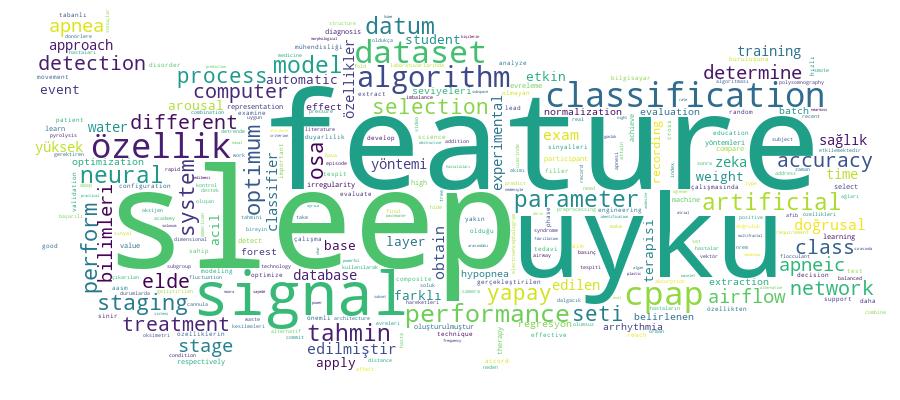
Competency Cloud