Profile URL: https://hdl.handle.net/20.500.13091/11623
Job Title:Dr. Öğr. Üyesi
Email Address:odemir@ktun.edu.tr
Main Affiliation:02.10. Department of Mechanical Engineering
Status: Current Staff
ORCID: 0000-0001-9411-775X
Scopus ID: 54410474700
YÖK Akademik: D9718B742807A679
Google Scholar: _bMT14AAAAAJ
Name Variants:
Demir, O.
15 results
Scholarly Output Search Results
Now showing 1 - 10 of 15
Article Citation - Scopus: 4Influence of Seawater on Mechanical Properties of Sio2-Epoxy Polymer Nanocomposites(2019) Kaybal, Halil Burak; Ulus, Hasan; Tatar, Ahmet Caner; Demir, Okan; Avcı, Ahmet; Avcie, AhmetIn this study, dispersion of nano SiO2 in epoxy composite aged in seawater and its effect on mechanical properties were studied. The SiO2-epoxy polymer nanocomposite materials were kept in seawater for a total of six months to be tested every two months. Tensile and bending tests were applied to composite materials as a mechanical test. According to the mechanical test results, there was less decrease in strength in SiO2-epoxy polymer nanocomposite material compared to unmodified material. In usage of seawater, the mechanical properties were observed to be the best in 3 % added SiO2-epoxy nanocomposite material.Article Citation - WoS: 12Citation - Scopus: 11Combined Effect of Fiber Hybridization and Matrix Modification on Mechanical Properties of Polymer Composites(Sage Publications Ltd, 2023-03-09) Demir, Okan; Yar, Adem; Eskizeybek, Volkan; Avci, AhmetGlass/carbon fiber reinforced hybrid composites are great candidates for wind turbine blade manufacturers to make larger blades. Variation of stacking sequences ensures design freedom to the composite engineers to optimize the composite structure's mechanical performance. On the other hand, matrix modification of polymer composites with nanoparticles is also of interest to introduce multifunctional properties. This research aims to scrutinize the influence of simultaneous fiber hybridization and matrix modification on polymer composites' tensile, flexural, and low-velocity impact properties. Hybrid glass/carbon epoxy composites and hybrid glass/carbon/multi-walled carbon nanotube (MWCNT) multiscale polymer composites of stacking sequences [GCGCGC](S), [CGCGCG](S), and [G(6)C(6)] were manufactured. Fiber hybridization dramatically improved tensile strength between 51% and 76% compared to glass fiber composite. Depending on the stacking sequence, the flexural strength of the hybrid composites was improved between 10% and 16% concerning carbon fiber composite. With the introduction of MWCNTs, a slight increase in the tensile strength for unsymmetrical hybrid composites by around 5% and decreases by 7% for symmetrical ones were observed. Similar behavior was seen for bending characteristics. Additionally, low-velocity impact tests showed that it is achievable to bring greater impact peak forces up to 70% for hybrid composites than carbon fiber epoxy composites. MWCNTs modification of the matrix restrained the impact damage propagation, as proved by C-scan analysis.Article Citation - Scopus: 9Evaluation of Low-Velocity Impact Behavior of Epoxy Nanocomposite Laminates Modified With Sio2 Nanoparticles at Cryogenic Temperatures(2019) Tatar, Ahmet Caner; Kaybal, Halil B.; Ulus, Hasan; Demir, Okan; Avcı, AhmetEpoxy based fiber reinforced composites are widely utilized in aerospace applications due to mechanical properties, thermal stability and, chemical resistance. However, it is known that materials become brittle and due to the poor crack resist restricts their applications in cryogenic engineering applications. The purpose of this paper is to experimentally investigate the cryogenic temperatures’ effect on the low-velocity impact (LVI) test of composite laminates. In addition, the effect of matrix modification in the studied composites was investigated. The LVI tests were conducted at RT (room temperature), 0 °C, -50 °C, -150 °C and -196 °C (liquid nitrogen temperature) on the composite laminates to measure influence on their energy absorption capacity. LVI tests performed according to ASTM-D-7136 standard under 10, 20 and 30 J impact energy levels. The results show that the contact forces and energy absorption capacities are improved by adding SiO2 nanoparticles into the epoxy matrix. The absorbed energy at cryogenic temperatures is increased by 24.87% from 18.1 J of pure epoxy resin to 22.7 J of modified epoxy. For the purpose of comparison, the LVI properties of composites at room temperature (RT) are also investigated. It is noted that the energy absorption capacity is not higher at cryogenic temperatures than that at RT for the modified and neat epoxy composites. Moreover, the peak contact forces are reduced in low-temperature conditions.Article Citation - WoS: 20Citation - Scopus: 27Effects of Cryogenic and Warm Temperatures on Quasi-Static Penetration Resistance of Carbon-Aramid Hybrid Nanocomposites Reinforced Using Halloysite Nanotubes(ELSEVIER, 2021-04-01) Çetin, Mehmet Emin; Tatar, Ahmet Caner; Demir, Okan; Önal, Gürol; Avcı, AhmetThe quasi-static penetration test of a composite structure aims to measure impact behavior under the out-of plane loadings without dynamic and rate effects. In this study, carbon-aramid reinforced nanocomposites were manufactured by vacuum-assisted resin transfer molding and hand lay-up techniques and characterized by quasi-static penetration tests. Halloysite nanotubes (HNTs) were added to epoxy resin as nanofillers. Quasi-static punch shear test (QS-PST) was performed using a 12.7-mm cylindrical punch with a 50.8-mm support span. QSPSTs tests were carried out at-50 degrees C,-25 degrees C, 0 degrees C, 25 degrees C, and 50 degrees C to determine the effect of temperature on quasi-static penetration behavior of neat and HNT-reinforced carbon-aramid nanocomposites. Absorbed energy values and penetration force-displacement curves were acquired from QS-PSTs for each sample. Photographs of the front and rear sides of the samples were taken and analyzed. Moreover, the samples were cut from the middle, and the damage throughout the thickness of the composite samples were examined. It was observed that for all test samples, damages increased when the temperatures decreased. For the same temperature, nano particle addition to the samples resulted in higher penetration force and less damage. We confirmed the possibility of increasing penetration resistance and energy absorption capacity by adding HNT to carbon-aramid fibers at cryogenic and warm temperatures.Article Multifunctional Titanium-Carbon Fiber Metal Laminates for next-Generation Automotive EMI Shielding: The Role of Polyimide Veil Interleaving(2026) Eskizeybek, Volkan; Yıldırım, Ferhat; Demir, OkanAs the automotive industry shifts toward electric vehicle (EV) architectures and autonomous driving systems, there is an urgent demand for multifunctional structural materials that offer both superior crashworthiness and high-frequency electromagnetic interference (EMI) shielding. While fiber-reinforced polymers (FRPs) facilitate lightweighting, their inherent brittleness and limited shielding capabilities often necessitate hybridization. This study investigates the synergistic integration of Ti-6Al-4V titanium alloy sheets and unidirectional carbon fiber plies in a 3/2 Fiber Metal Laminate (FML) configuration. To address interlaminar delamination and enhance functional performance, neat thermoplastic polyimide (PI) veils were incorporated as interleaves. The EMI shielding effectiveness (SE) of the fabricated FMLs was rigorously characterized in the X-band (8.2–12.4 GHz). Results indicate that the PI veil-integrated FMLs achieved a SE exceeding 30 dB, surpassing the industrial requirement for commercial electronic protection. The enhanced performance is attributed to the PI veil acting as a dielectric interlayer that facilitates multiple internal reflections between the conductive titanium and carbon fiber phases, thereby shifting the primary shielding mechanism toward absorption. Skin depth analysis further substantiated that the neat veil optimizes the electromagnetic interaction within the hybrid structure. This research demonstrates that Ti/CF FMLs interleaved with neat PI veils provide a robust, dual-purpose solution for next-generation automotive engineering, ensuring structural integrity while shielding sensitive autonomous systems from electromagnetic disruption.Article Citation - WoS: 28Citation - Scopus: 29The Effect of Halloysite Nanotube Modification on Wear Behavior of Carbon-Aramid Fiber Reinforced Hybrid Nanocomposites(WILEY, 2021-11-18) Çetin, Mehmet Emin; Baştosun, Yusuf; Tatar, Ahmet Caner; Çetin, Muhammet Hüseyin; Demir, Okan; Önal, Gürol; Avcı, AhmetIn this study, the carbon-aramid fiber reinforced hybrid composites are fabricated using a vacuum-assisted hand lay-up method using halloysite nanotubes (HNTs) modified epoxy matrix. Ball-on-disk wear tests are performed to analyze the tribological effect of neat and HNTs-added specimens at 10, 15, and 20 N loads and 1 m/s sliding speed. Additionally, the wear rate and friction coefficient results are obtained to investigate the effect of the HNTs on the tribological behavior of hybrid composites. The wear mechanism of neat and nanocomposite specimens is specified by scanning electron microscopy (SEM) images, and the elemental analysis of worn surfaces is performed using EDX. Finally, the surface morphology is evaluated with 3D topography images. Additionally, thermal camera images are used to identify the thermal conductivity effect of HNTs on wear. The wear test results show that HNTs-addition to composite decreased the friction coefficient by 9%, 10%, and 11% for 10 N, 15 N, and 20 N loadings, respectively. The wear rate is also decreased average by 75% for wear loadings. Surface form images acquired from 3D topography support the enhancement in the friction coefficient and wear rate values. Furthermore, thermal camera images show that thermal conductivity improvement on the contact region is attributed to well thermal properties of HNTs. Furthermore, the solid-lubricant characteristic of HNTs as forming tribofilm is determined as the main reason for the enhanced tribological performance of nanocomposites. Finally, a detailed wear mechanism is proposed to explain the wear behavior of HNTs-added carbon-aramid hybrid composites based on SEM images.Article Mechanical and EMI Shielding Performance of Glass/Carbon Hybrid Composites with Cellulose-Paper Interleaves after Cryogenic Conditioning(SAGE Publications Ltd, 2026) Eskizeybek, Volkan; Üstün, Tugay; Demir, Okan; Yıldırım, FerhatThis research assesses the mechanical and electromagnetic interference (EMI) shielding performance of cellulose-interlayered glass/carbon hybrid fiber-reinforced polymer (HFRP) composites at room temperature (RT) and cryogenic (-196 degrees C) conditions. Symmetric [GC]2[CG]2 and [CG]2[GC]2 arrangements were constructed. Mechanical testing demonstrated that augmenting the density of the cellulose interfaces markedly enhanced flexural performance, while concurrently resulting in a drop of tensile strength by as much as 23% owing to the development of weaker interlayers. Bending tests revealed that all-plane interleaving enhanced strength from 215 to 250 MPa for G/C and from 226 to 335 MPa for C/G; in cryogenic conditions, the flexural strength of C/G reached a maximum of 340 MPa. Additionally, all composite variations exceeded the 30 dB commercial reference value for EMI shielding effectiveness, while the cryogenically processed all-plane C/G laminate reached a SETot peak of 63 dB. The protective mechanism was mostly absorption-based (similar to 80%), augmented by the porosity configuration of the cellulose fibers and cryogenically produced micropores that facilitate repeated internal reflections. The results confirm the multifunctional efficacy of sustainable cellulose interlayers for high-performance applications under harsh conditions.Article Citation - WoS: 11Citation - Scopus: 10Selectively Reinforced Functionally Graded Composite-Like Glass/Carbon Polymer Nanocomposites: Designed for Efficient Bending and Impact Performance(KOREAN FIBER SOC, 2021-08-10) Demir, Okan; Tatar, Ahmet Caner; Eskizeybek, Volkan; Avcı, AhmetOffshore wind turbine blades (OWTBs) are exposed to various types of loadings during their service life. Moreover, due to their tremendous size, huge investment costs are established, including advanced engineering materials and production process solutions. To decrease their investment cost without sacrificing their mechanical performances, advanced engineering solutions in the view of material selection and design should be implemented. With this motivation, we aimed to develop a novel laminated composite design considering reducing investment costs without compromising the bending and impact resistance of an OWTB. For this, an efficient and cost-effective design of a functionally graded composite (FGM)-like glass/carbon fibers reinforced hybrid polymer composite with a specific stacking sequence was presented. To evaluate mechanical performance of the composite structure, tensile, flexural, and to simulate environmental conditions, low-velocity impact tests were conducted. Furthermore, multi-walled carbon nanotubes (MWCNTs) were also introduced into the polymer matrix to evaluate their effectiveness in the hybridized composite. Drastic improvements in the bending strength (55.8 %) and strain (39.7 %) were obtained compared to the neat carbon fiber reinforced epoxy composites (CFs), especially with the aid of MWCNTs. According to impact tests, it was pointed out that it is possible to obtain higher impact peak forces (around 15 %) compared to neat CFs. However, MWCNTs contributed with slight increments in impact resistance but effectively restricted the impact damage propagation. This study reveals it is possible to tune the bending performance, the absorbed energy, and the damage extension by utilizing glass and carbon fiber laminates in an FGM-like structure.Article Citation - WoS: 6Citation - Scopus: 5Effects of Low-Velocity Impact on Vibration Behaviors of Polyamide Fiber-Reinforced Composites(Springer Heidelberg, 2021-12-10) Coskun, Taner; Yar, Adem; Demir, Okan; Sahin, Ömer SinanFabric and resin materials, fiber orientations, volume fraction and knitting patterns are highly effective for the mechanical and dynamic properties of the composite materials. These materials can be subjected to impact loads at various energy levels depending on their application areas, and thus causes the material properties to change. Therefore, experimental studies have been carried out to determine the dynamic properties for the polyamide fiber-reinforced epoxy composites, which can be defined as a novel composite material variation, before and after low-velocity impact. In this context, the composite specimens were subjected to one and two repeated low-velocity impacts under 25.2 J constant energy. Apart from that experimental vibration tests were conducted under free-free boundary conditions to determine how dynamic properties such as natural frequency, flexural modulus, and specific damping capacity will change with the consequent distortion in the structural integrity. For the current study, at least three samples were subjected to the experimental tests to verify obtained results, and standard deviations revealed that results were reliable and repeatable. As a consequence of the current study, it has been concluded that the composite specimens have high matrix volume fractions due to the knitting architecture of the polyamide fabrics. Moreover, since the polyamide fabrics have spacious mesh weave, an improvement for the damping properties has been achieved due to the increased fiber-resin interface. It has been observed that polyamide composite specimens exhibited approximately 11.5% specific damping capacity, and had relatively higher damping properties compared to the conventional materials. It was also revealed that the degradation in the specific damping capacities was observed by virtue of the low-velocity impact but it was not significantly effective on the dynamic properties due to the limited damage area. Additionally, it was found that polyamide fiber-reinforced composites can be used as the optimum material for the application areas in which high damping and impact resistance are required.Article Citation - WoS: 14Citation - Scopus: 16Residual Compressive Strength of Polyamide Fiber-Reinforced Epoxy Composites After Low-Velocity Impact(Wiley, 2023) Coşkun, Taner; Yar, Adem; Demir, Okan; Şahin, Ömer SinanIn this study, polyamide fibers, which stand out with their excellent plastic deformation and energy absorption capacity, were used as reinforcement materials, and in-house manufactured composite specimens were subjected to low-velocity impact (LVI), compression after impact (CAI) and tensile tests. Within this scope, one and two repeated drop tests were performed under 3 m/s velocity to determine LVI responses and how impact number affects the dynamic properties. CAI tests were also performed at a 1 mm/min crosshead speed, and mechanical properties for non-impacted, one-impacted, and two-impacted specimens were determined. As a result of the outstanding plastic deformation capacity of thermoplastic fabrics, it is concluded that polyamide composites exhibited quite large strains. Furthermore, it was understood from the tensile responses that tensile stresses were carried by the thermoplastic fibers in two different regimes and significantly high toughness was obtained. Moreover, reductions in the maximum compression loads, critical buckling loads and axial stiffness were observed due to degradation in structural integrity after impact loads. Additionally, the utilization of recyclable thermoplastic polyamide fibers as reinforcement material instead of conventional reinforcement materials such as carbon and glass fibers provide more environmentally friendly products.
Research Topics
Domains
Physical Sciences
Fields
EngineeringMaterials Science
Subfields
Mechanics of MaterialsMechanical EngineeringMaterials ChemistryPolymers and Plastics
Specific Research Areas
Mechanical Behavior of Composites
Fiber-reinforced polymer composites
Carbon Nanotubes in Composites
Natural Fiber Reinforced Composites
Polymer Nanocomposites and Properties
Epoxy Resin Curing Processes
Sustainable Development Goals
 7
AFFORDABLE AND CLEAN ENERGY
2
Research Products
 2
ZERO HUNGER
1
Research Products

Documents
18
Citations
342
h-index
10

This researcher does not have a WoS ID.
Publication Collaboration
| Affiliation Name | Count |
|---|---|
| Konya Technical University | 10 |
| Selçuk University | 7 |
| Çanakkale Onsekiz Mart Üniversitesi | 5 |
| Necmettin Erbakan University | 4 |
| Bingöl University | 3 |
1 / 3
Data obtained from OpenAlex
| Journal | Count |
|---|---|
| Polymer Composites | 2 |
| Research on Engineering Structures and Materials | 2 |
| ICCM International Conferences on Composite Materials | 1 |
| International Journal of Automotive Engineering and Technologies | 1 |
| Journal of Composite Materials | 1 |
Current Page: 1 / 3

Scholarly Output
15
Articles
13
Views / Downloads
27/30
Supervised MSc Theses
1
Supervised PhD Theses
0
WoS Citation Count
134
Scopus Citation Count
154
Patents
0
Projects
0
WoS Citations per Publication
8.93
Scopus Citations per Publication
10.27
Open Access Source
3
Supervised Theses
1
Scopus Quartile Distribution
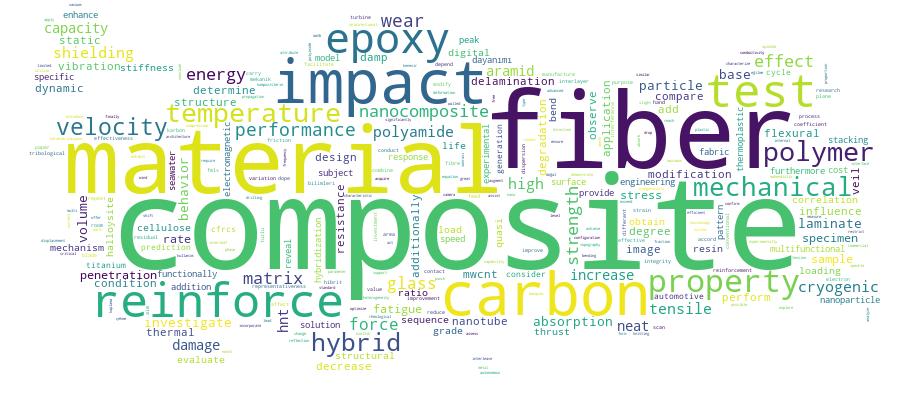
Competency Cloud