Profile URL: https://hdl.handle.net/20.500.13091/11854
Job Title:Prof. Dr.
Email Address:eulker@ktun.edu.tr
Main Affiliation:10.01. Department of Computer Engineering
Status: Current Staff
ORCID: 0000-0003-4393-9870
Scopus ID: 23393979800
YÖK Akademik: 9653507F0C718D4D
Google Scholar: wKdHsP0AAAAJ
Web of Science ID: ABA-5846-2020
Name Variants:
Ulker, E. Erkan, U.
46 results
Scholarly Output Search Results
Now showing 1 - 10 of 46
Article Citation - WoS: 15Citation - Scopus: 21Discrete Social Spider Algorithm for the Traveling Salesman Problem(SPRINGER, 2020-06-30) Baş, Emine; Ülker, ErkanHeuristic algorithms are often used to find solutions to real complex world problems. These algorithms can provide solutions close to the global optimum at an acceptable time for optimization problems. Social Spider Algorithm (SSA) is one of the newly proposed heuristic algorithms and based on the behavior of the spider. Firstly it has been proposed to solve the continuous optimization problems. In this paper, SSA is rearranged to solve discrete optimization problems. Discrete Social Spider Algorithm (DSSA) is developed by adding explorer spiders and novice spiders in discrete search space. Thus, DSSA's exploration and exploitation capabilities are increased. The performance of the proposed DSSA is investigated on traveling salesman benchmark problems. The Traveling Salesman Problem (TSP) is one of the standard test problems used in the performance analysis of discrete optimization algorithms. DSSA has been tested on a low, middle, and large-scale thirty-eight TSP benchmark datasets. Also, DSSA is compared to eighteen well-known algorithms in the literature. Experimental results show that the performance of proposed DSSA is especially good for low and middle-scale TSP datasets. DSSA can be used as an alternative discrete algorithm for discrete optimization tasks.Article Citation - WoS: 145Citation - Scopus: 162Pso-Based Image Encryption Scheme Using Modular Integrated Logistic Exponential Map(Elsevier Ltd, 2024-03-01) Kocak, O.; Erkan, U.; Toktas, A.; Gao, S.Image encryption (IE) has been essential for internet-based storing and transferring in recent years. Effective chaotic systems play a crucial role in IE schemes which widely depend on chaotic maps and keys. However, the existing chaotic maps suffer from low performance and narrow chaotic ranges, and they utilize casual key generation approaches rather than optimum keys. In this study, an IE scheme based on key optimization using particle swarm optimization (PSO) algorithm and a novel modular integrated logistic exponential (MILE) map is presented. The chaotic performance of the MILE map is validated across a comparison with the existing maps thorough measurements such as LE, SE, 0–1 Test, and PE with means values of 12.0000, 2.1866, 0.9981, and 0.9998, respectively. The key is optimized on a small part of the image to be encrypted instead of the whole image that is employed by the existing works. That is why the IE scheme is faster than those works. Afterward, the PSO-based IE scheme is undergone reliable crypto-analyses and attacks. It is also verified through a comparison with the existing IE schemes. The proposed IE scheme is the best owing to having exceptional mean values of key sensitivity 99.6117, variance 893.12, χ2 222.4057, information entropy 7.9994, NPCR 99.6090, and UACI 33.4662. Thanks to the MILE map, the PSO-based IE scheme demonstrates excellent numerical and visual encryption results. © 2023 Elsevier LtdArticle Citation - WoS: 20Citation - Scopus: 24A Binary Social Spider Algorithm for Continuous Optimization Task(SPRINGER, 2020-01-30) Baş, Emine; Ülker, ErkanThe social spider algorithm (SSA) is a new heuristic algorithm created on spider behaviors. The original study of this algorithm was proposed to solve continuous problems. In this paper, the binary version of SSA (binary SSA) is introduced to solve binary problems. Currently, there is insufficient focus on the binary version of SSA in the literature. The main part of the binary version is at the transfer function. The transfer function is responsible for mapping continuous search space to discrete search space. In this study, four of the transfer functions divided into two families, S-shaped and V-shaped, are evaluated. Thus, four different variations of binary SSA are formed as binary SSA-Tanh, binary SSA-Sigm, binary SSA-MSigm and binary SSA-Arctan. Two different techniques (SimSSA and LogicSSA) are developed at the candidate solution production schema in binary SSA. SimSSA is used to measure similarities between two binary solutions. With SimSSA, binary SSA's ability to discover new points in search space has been increased. Thus, binary SSA is able to find global optimum instead of local optimums. LogicSSA which is inspired by the logic gates and a popular method in recent years has been used to avoid local minima traps. By these two techniques, the exploration and exploitation capabilities of binary SSA in the binary search space are improved. Eighteen unimodal and multimodal standard benchmark optimization functions are employed to evaluate variations of binary SSA. To select the best variations of binary SSA, a comparative study is presented. The Wilcoxon signed-rank test has applied to the experimental results of variations of binary SSA. Compared to well-known evolutionary and recently developed methods in the literature, the variations of binary SSA performance is quite good. In particular, binary SSA-Tanh and binary SSA-Arctan variations of binary SSA showed superior performance.Article Optimizing the Exploitation of Ornamental Rock Quarries by Analysing the Fracture Network(2024) Asimopolos Laurentiu; Asimopolos Natalia-silvia; Turanboy Alparslan; Ülker, Erkan; Asimopolos Adrian-aristideWithin the ERA-MIN project: Artificial Intelligence and Combined Survey Techniques for Stone Quarries Optimization (AI-COSTSQO acronym), a decision support system (DSS) was developed based on computerized expert systems, artificial intelligence (AI), as well as other algorithms, which could include multi-criteria methods and analytic hierarchy process (AHP). This system (DSS) included: generating block size distribution curves (BSDC), determining minimum and maximum limits of cuboids and trading volumes as well as establishing a set of rules for trading decisions, finding maximum cuboids from irregular polyhedral (MaxQ), 3D Graphics Representation of Blocks and Mapping/Contouring, Digital Elevation Models (DEM) from Point Clouds and Discrete Fracture Networks (DFNs) and In-situ Field Investigation, which represented the basis for the realization of the components of (DSS).Article Jeoloji Bilimleri Çalışmalarında Kullanılabilecek Web Tabanlı Bir 3D Görselleştirme Aracının Geliştirilmesi(Konya Teknik Üniversitesi, 2025-06-01) Ülker, Erkan; Turanboy, Alparslan; Uysal, İbrahim; Arık, Görkem Rıdvan3D modelling is the process of creating and representing three-dimensional geometric models of objects. These models enable real-world objects to be transferred to the digital environment. 3D modelling is used in many fields such as architecture, engineering, game development, animation, film production, product design, data visualization and virtual reality. Data visualization makes data more natural for the human mind to understand and thus facilitates the identification of trends, patterns, and outliers within data sets. Therefore, it has a critical importance in the management and interpretation of data. 3D visualization studies are a necessary 3D presentation tool for the project design processes as well as the sales and marketing phase. The aim of this study is to develop an interactive web application to model and visualize the discontinuity network of a natural stone quarry in 3D using WebGL technology. The study includes technical developments in web- based 3D modelling, data visualization, interactive user interface, and data integration. Additionally, topics such as how to use WebGl technology for quarry modelling, data management, simulation techniques and user experience optimization are also focused on.Article Improved Social Spider Algorithm for Minimizing Molecular Potential Energy Function(2020-09-03) Baş, Emine; Ülker, Erkan; Emine, BaşThe social spider algorithm (SSA) is a new heuristic algorithm created on spider behaviors to solve continuous optimization problems. In this study, SSA is used in order to minimize a simplified model of the energy function of the molecule. The Molecular potential energy function problem is one of the most important real-life problems. The Molecular potential energy function problem attempts to predict the 3D structure of a protein. SSA is developed by various techniques (Crossover-mutation and Gbest convergence-silent spider techniques) and SSA is called Improved SSA (ISSA). By these techniques, the exploration and exploitation capabilities of SSA in the continuous search space are improved. The general performances of SSA and ISSA are tested on low-scaled and large-scaled thirteen benchmark functions and obtained results are compared with each other. Wilcoxon signed-rank test is applied to SSA and ISSA results. Then, the general performance of the SSA and ISSA is tested on a simplified model of the molecule for different dimensions. Also, the performance of the ISSA is compared to various state-of-art algorithms in the literature. The results showed the superiority of the performance of ISSA.Article Bit-Level Quad-Block Shuffling and Sequential Summing Dispersing Image Encryption Based on Hyperchaotic 2D Euler Pi Crossed Sine Map(Academic Press Inc. Elsevier Science, 2026) Kocak, Omer; Erkan, Ugur; Babaoglu, IsmailChaos-based image encryption methods strongly depend on the complexity and dynamic behavior of chaotic maps to achieve effective permutation and diffusion. In this study, a novel two-dimensional Euler Pi Crossed Sine (2D-EPICS) chaotic map is introduced, which exhibits hyperchaotic dynamics, wide chaotic ranges, and high sensitivity to initial conditions. The chaotic properties of the proposed map are rigorously analyzed using bifurcation diagrams, phase trajectories, Lyapunov exponents, and multiple entropy measures, including sample entropy, permutation entropy, Kolmogorov entropy, and C0 complexity, confirming its strong nonlinear behavior and unpredictability. Building upon this chaotic foundation, the Bit-Level Quad-Block Shuffling and Sequential Summing Dispersing Image Encryption (BQSSSD-IE) scheme is then developed. The encryption process consists of a bit-level permutation stage based on quadruple pixel blocks, followed by a bidirectional diffusion stage achieved through cumulative row-wise and column-wise summations, both driven by sequences generated from the 2D-EPICS map. Extensive security analyses and comparative evaluations demonstrate that the proposed method provides high entropy, low pixel correlation, strong resistance against statistical, differential, noise, and cropping attacks, and competitive computational efficiency. The enhanced dynamic behavior of the 2D-EPICS map significantly strengthens the overall confusion and diffusion capabilities of the encryption scheme, making BQSSSD-IE suitable for secure and real-time image protection applications.Other Classification of Pressure and Diabetic Chronic Wound Tissue Images with Deep Learning Methods(2022) Ülker, Erkan; Işıklı, Osman Yaşar; Eldem, HüseyinAbstract Pressure wounds are skin injuries that occur due to prolonged inactivity of the patient. They reduce blood flow. They cause muscle and skin ischemia, which leads to necrosis and cell death. The automatic classification of pressure sores according to international principles allows rapid recommendation of appropriate treatment methods. In this way, life quality of patients will be increased by ensuring that the treatments to be applied are efficient. Diabetes foot wounds are among the current serious and chronic diseases and are among the wound types that threaten life and reduce the quality of life. In the literature, there are mostly studies that make binary classification (ulcer-nonulcer) showing which type pressure and diabetic foot ulcers belong to. In this study, the impact of recently popular deep learning methods in image processing for tissue classification of pressure and diabetic wound images is discussed. Deep Convolutional Neural Network (CNN) architectures were used to determine which of the granule, necrotic and slough classes wound images belong to, according to their characteristics on the tissue. In this study, in which 19 CNN architectures were discussed, CNN architectures that give successful results on the dataset were observed. In addition, the effect of Maximum Epoch Number (ME), Initial learning rate (LR) and Minibatch size (MBS) parameter values used in the architectures were also researched. In the experiments performed on 1045 pressure and 1045 diabetic wound images collected from different patients from the Wound Care Unit of Karaman Education and Research Hospital, the best results were obtained with the AlexNet architecture with an Accuracy value of 95.83%. Optimum values of ME, LR and MBS parameter values were also found in parameter optimization tests. Comparisons were made with the results of studies on similar wound datasets in the literature, and it was shown that AlexNet and VGG16 architectures achieved competitive results.Article A New Approach for Estimating Discontinuity Network in Rock Mass(Mining Revue, 2025-06-01) Turanboy, Alparslan; Ülker, Erkan; Arık, Görkem Rıdvan; Uysal, İbrahimIt is essential to reveal a rock mass network as realistic as possible for efficient production in natural stone quarries. To create an in-situ rock mass network model, data must first be obtained using one or more robust survey techniques. In addition, it is necessary to use an ideal network model that can reach as many intact blocks as possible that may be encountered in the production sector and even in the next cutting periods with their locations and dimensions. Due to the inhomogeneous and anisotropic structure of the rock mass, numerical and stochastic processes and methods are frequently used to simulate the discontinuity network. These require complex, computationally intensive operations, and the ability to represent the rock mass largely depends on the number and quality of data. In this paper, a practical approach that includes analytical and geometric solution methods for discontinuity network modelling, in which all survey techniques can be used, has been presented. The strategy aims to reflect discontinuities outside the relevant production sector to the rock mass too. Thus, an attempt is made to achieve a realistic rock mass network. The generated model has been tested on samples of highway slope and marble quarry bench, and the results have been presented.Article Aydınlatma Özniteliği Kullanılarak Evrişimsel Sinir Ağı Modelleri İle Meyve Sınıflandırma(2020-04-08) Büyükarıkan, Birkan; Ülker, ErkanAydınlatma, nesnelerin olduğu gibi görünmesini sağlayan doğal veya yapay kaynaklardır. Özellikle görüntü işleme uygulamalarında yakalanan görüntüdeki nesne bilgisinin eksiksiz ve doğru şekilde alınabilmesi için aydınlatmanın kullanılması bir gerekliliktir. Ancak aydınlatma kaynağının tür, parlaklık ve konumunun değişimi; nesnenin görüntüsü, rengi, gölgesi veya boyutunun da değişmesine ve nesnenin farklı olarak algılanmasına sebep olmaktadır. Bu sebeple görüntülerin ayırt edilmesinde güçlü bir yapay zeka tekniğinin kullanılması, sınıfların ayırt edilmesini kolaylaştıracaktır. Bir yapay zeka yöntemi olan Evrişimsel Sinir Ağları (ESA), otomatik olarak özellikleri çıkarabilen ve ağ eğitilirken öğrenme sağlandığı için bariz özellikleri kolaylıkla belirleyen bir algoritmadır. Çalışmada ALOI-COL veriseti kullanılmıştır. ALOI-COL, 12 farklı renk sıcaklığıyla elde edilmiş 1000 sınıftan oluşan bir verisetidir. ALOI-COL verisetindeki 29 sınıftan oluşan meyve görüntüleri, ESA mimarilerinden AlexNet, VGG16 ve VGG19 kullanılarak sınıflandırılmıştır. Verisetindeki görüntüler, görüntü işleme teknikleriyle zenginleştirilmiş ve her sınıftan 51 adet görüntü elde edilmiştir. Çalışma; %80-20 ve %60-40 eğitim-test olmak üzere iki yapıda incelenmiştir. 50 devir çalıştırılması sonucunda test verileri, AlexNet (%80-20) ve VGG16 (%60-40) mimarilerinde %100, VGG19 (%80-20) mimarisinde ise %86.49 doğrulukla sınıflandırılmıştır.
Research Topics
Domains
Physical Sciences
Fields
Computer ScienceEngineering
Subfields
Artificial IntelligenceComputational MechanicsIndustrial and Manufacturing EngineeringComputational Theory and MathematicsMechanics of Materials
Specific Research Areas
Metaheuristic Optimization Algorithms Research
Advanced Numerical Analysis Techniques
Vehicle Routing Optimization Methods
Advanced Multi-Objective Optimization Algorithms
Rock Mechanics and Modeling
AI in cancer detection
Sustainable Development Goals
 7
AFFORDABLE AND CLEAN ENERGY
1
Research Products
 9
INDUSTRY, INNOVATION AND INFRASTRUCTURE
1
Research Products
 16
PEACE, JUSTICE AND STRONG INSTITUTIONS
1
Research Products

Documents
60
Citations
1057
h-index
19

Documents
56
Citations
837
Publication Collaboration
| Affiliation Name | Count |
|---|---|
| Selçuk University | 50 |
| Konya Technical University | 33 |
| Necmettin Erbakan University | 17 |
| Karamanoğlu Mehmetbey University | 8 |
| Tokat Gaziosmanpaşa Üniversitesi | 3 |
1 / 5
Data obtained from OpenAlex
| Journal | Count |
|---|---|
| ARTIFICIAL INTELLIGENCE REVIEW | 3 |
| EXPERT SYSTEMS WITH APPLICATIONS | 2 |
| Applied Sciences | 1 |
| Applied Sciences (Switzerland) | 1 |
| APPLIED SOFT COMPUTING | 1 |
Current Page: 1 / 8

Scholarly Output
46
Articles
37
Views / Downloads
152/210
Supervised MSc Theses
3
Supervised PhD Theses
4
WoS Citation Count
457
Scopus Citation Count
569
Patents
0
Projects
0
WoS Citations per Publication
9.93
Scopus Citations per Publication
12.37
Open Access Source
19
Supervised Theses
7
Scopus Quartile Distribution
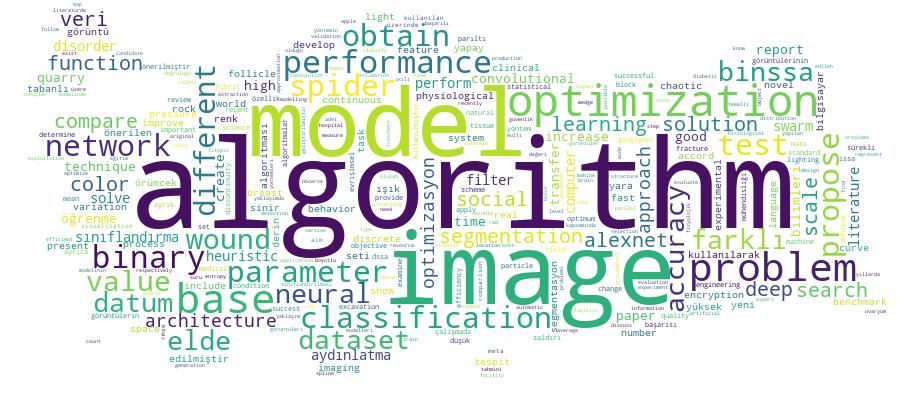
Competency Cloud