Profile URL: https://hdl.handle.net/20.500.13091/11581
Job Title:Prof. Dr.
Email Address:mbagci@ktun.edu.tr
Main Affiliation:02.10. Department of Mechanical Engineering
Status: Current Staff
ORCID: 0000-0001-6934-8660
Scopus ID: 26434127300
YÖK Akademik: 6A82A1D3026E0EB3
Google Scholar: NElCsewAAAAJ
Web of Science ID: ABI-4797-2020
Name Variants:
Bagci, Mehmet
49 results
Scholarly Output Search Results
Now showing 1 - 10 of 49
Article Citation - WoS: 7Citation - Scopus: 7Solid Particle Erosion Behavior on the Outer Surface of Basalt/Epoxy Composite Pipes Produced by the Filament Winding Technique(MDPI, 2023) Demet, Seyit Mehmet; Sepetcioğlu, Harun; Bagci, MehmetBasalt/epoxy composite pipes in a [+/- 55](4) winding configuration were produced on CNC filament winding machines (10 N fiber tension and similar to 11 mm bandwidth). In the experiments, a 34 m/s impact velocity was set using the double-disc method, and five different particle impingement angles (30, 45, 60, 75, and 90 degrees) were used to determine the erosive effect on the outer surfaces of filament wound composite pipes under the influence of 600 mu m erodent particles with angular geometry in the test set, complying with the ASTM G76-95 standard. The winding patterns in the lamina (+/- 55 angle-ply laminate region) and zigzag (+/- 55 zigzag region) regions of BFR/EP pipes were determined to have significant effects on solid particle erosion resistance, as evidenced by the SEM images.Master Thesis Bitkisel ve Madensel Yağlayıcılar Etkisinde Hidrodinamik Kaymalı Yatak Uygulamalarında Stribeck Eğrisinin Oluşumu(2025) Salur, Mustafa; Bağcı, MehmetBu çalışma, kaymalı yatakların tasarımında kritik öneme sahip olan Stribeck Eğrisini deneysel olarak inceleyerek, farklı yağlayıcılar ve malzemelerle sürtünme katsayısı, hız ve yük ilişkilerini detaylı bir şekilde analiz etmeyi amaçlamaktadır. Çalışma kapsamında kullanılan yağlayıcılar, geleneksel madensel yağların (5W30 ve 15 w 40) yanı sıra, bitkisel yağların (soya, aspir, ay çekirdeği, zeytin ve mısır yağı) performansını değerlendirmek amacıyla karışımlar halinde test edilmiştir. Deneyler, Konya Teknik Üniversitesi bünyesinde bulunan PA Hilton Journal Friction Apparatus HFN 5 cihazı kullanılarak gerçekleştirilmiş ve RG-5 ile CuSn12 bronz yatak malzemeleri üzerinde sürtünme katsayısı ile hız-yük değişkenleri arasındaki ilişkiler Stribeck Eğrisi doğrultusunda analiz edilmiştir. Çalışmada, farklı hız (90, 150, 300, 450, 600, 750, 900, 1020, 1200, 1350 ve1500 dev/dk) ve yük (0, 20, 40 ve 60 N) aralıklarında sürtünme katsayıları ölçülmüş, yağlama koşulları detaylı bir şekilde değerlendirilmiş ve yağlama türlerinin enerji verimliliğine olan etkileri sorgulanmıştır. Elde edilen bulgular, bitkisel yağların endüstriyel uygulamalarda alternatif bir yağlayıcı olarak kullanılabileceğini ve karışımların sürtünme katsayısı üzerindeki etkilerinin madensel yağlarla kıyaslandığında belirli avantajlar sağladığını göstermiştir. Sonuç olarak, bu çalışma, enerji verimliliği ve performans optimizasyonu açısından kaymalı yatak tasarımlarına önemli bir katkı sağlamaktadır.Article Determination of Solid Particle Erosion Wear Behaviour of Aircraft Turbine Blades Specific To Additive Manufacturing Orientation Effects(2025-04-07) Aydın Mehmet Esat; Demirci Musa; Bağcı, MehmetIn many areas of the industry, especially in the aviation sector, mechanical components have to work under harsh environmental conditions. In addition to being exposed to extreme environmental conditions due to the environment in which they operate, the basic components of aircraft have to take into account many engineering details such as high strength expectations, speed and impact problems under the influence of hard particles. In addition, the geometries of parts in aircraft can be quite complex and detailed shapes. For this reason, it makes sense to utilize different manufacturing processes to create the final shapes of the components. In this study, a research was carried out to determine the solid particle erosion wear behaviour of In718 test specimens representing the material properties of jet engine turbine blades in aircraft by alternative manufacturing methods and to interpret the results obtained by performing experiments. In718 alloys with horizontal (0°), vertical (90°) and angular (45°) orientation were produced by selective laser melting, a layered powder-based additive manufacturing method, and test specimens were produced by casting, a conventional method. These specimens were subjected to solid particle erosion tests using three different sizes (500 g, 1000 g and 1500 g) of Al2O3 abrasive particles at 30° impact angle. Surface topography and macroscope images were used to interpret the results of the surface differences obtained at the end of the experiments. Consequently, the layer orientation in additive manufacturing and the additive manufacturing method were compared with parts produced by a conventional method in terms of erosion rate. In addition, it was concluded whether the surface damage that occurs in erosive wear depending on the impact angle has a ductile, semi-ductile or brittle character.Conference Object Aerodynamic Design and Analysis of Aircraft Palaveter Wing Structure Utilizing Discrete Element Method (DEM)(Institute of Electrical and Electronics Engineers Inc., 2025-07-15) Aydın M.E.; Bağcı M.; Aydın, Mehmet Esat; Bağcı, MehmetAirplanes are among one of main vehicles in the aviation sector. Today, these vehicles are used in transportation, military applications and various activities. Mechanical components of vehicles traveling at high altitudes are subjected to harsh operating conditions and technical factors such as material selection and component geometry need to be considered during design. For instance, an airplane at 40,000 feet above ground is exposed to cold ambient conditions with its external components. They also require complex component geometry, light weight and wear resistance. Combining these features expected from working conditions and components in structure, designs of aircraft components are differentiated. In this context, the palaveter component, which plays a critical role in aircraft, takes output power from turbojet engine and generates thrust and traction force, enabling aircraft to hold and advance in air. Aerodynamic effects encountered by aeroplanes and various micron-sized particles in environment cause damage to palaveter wing structure and prevent operation of aircraft. An airplane flies at about -50°C, -60°C and reaches speeds of 800, 900 km/h. Collision with micron-sized hard particles at such high speeds and low ambient temperatures calls into question whether palaveter components will have sufficient mechanical strength. Various design details of the palaveter wing structure should be planned in advance, taking into account aerodynamic effects, cold ambient conditions and operating conditions of the aircraft. In addition, palaveter material selection should also be made according to these effects. In this study, considering the aerodynamic effects and operating temperatures to which the aircraft palaveter components are exposed, effects to which component will be exposed are analyzed with discrete element method (DEM) The design parameters of high and low wing angle, reverse angle, angle of attack and wing ridge of the palaveter wing structure were determined by taking into account the vehicle speed of 800 km/h relative speed, which rotates at 3 different values between 0 - 100 mph. Titanium and aluminum alloys were focused on as palaveter materials, and appropriate material determination was also made and aircraft palaveter design was realized. Crash analyses with micron-sized hard particles were applied to the appropriate designs with discrete element software and it was also investigated that they showed the required strength with the designed working conditions. As a result of lack of resources in literature, a necessary output for designers was created as a result of this study. ©2025 IEEE.Article Experimental Investigation of the Solid Particle Erosion Behavior of Cr/Cr2O3 and Cr/H2SO4 Coatings Using Ex-Situ Digital Image Analysis(SAGE Publications Ltd, 2026) Aydin, Mehmet Esat; Bagci, MehmetThis study experimentally investigated the solid particle erosion behavior of black chromium (Cr/Cr2O3) and white chromium (Cr/H2SO4) coatings deposited on St37 steel under different impact angles, temperatures, and particle loads. The main objective of the study was to determine the influence of coating type on erosion resistance and to quantitatively evaluate surface damage using Ex-situ digital image analysis (DIA). Erosion tests were carried out under 3 bar air pressure at impact angles of 30 degrees and 45 degrees, temperatures of 22 degrees C and 50 degrees C, and particle loads ranging from 2.5 to 25 kg. Experimental results revealed that chromium coatings significantly reduced erosion-induced weight loss compared with uncoated St37 steel, while white chromium coatings generally exhibited the lowest wear loss. Increasing temperature improved erosion resistance, particularly for white chromium-coated samples. In addition to conventional weight loss measurements, heat maps, pixel intensity histograms, and GLCM-based texture analyses were employed for quantitative and image-based characterization of surface damage. Furthermore, Pearson correlation and one-way analysis of variance analyses confirmed that coating type had a statistically significant effect on erosion behavior (p < .05). The obtained results demonstrated that the ex-situ DIA approach can effectively support conventional erosion analyses for quantitative surface characterization.Article Hydrostatic and Hydrodynamic Bearing on Grinding Machine(2024-12-31) Talih Galip; Kandemir Sani; Bağcı, MehmetIn recent years, the demand for hydrostatic bearing application has been increasing due to the possibilities and advantages they offer. Advances in the understanding of hydrostatic lubrication and the improvement of computer technology have opened new avenues for improving hydrostatic bearing performance and precision.This paper reviews the geometry, advantages and disadvantages of hydrostatic bearings, including the hydraulic system. Hydrostatic bearing applications operate using relatively high viscosity oil, but have the potential for extremely low motion errors with high damping, high stiffness andhigh load capacity. Another important advantage of hydrostatic bearing is the negligible wear of the sliding surfaces, which are completely separated by the oil film. In general, pocket depths of 0.5-5 mm and bearing clearance of 0.001-0.01 mm are preferred in hydrostatic bearings.In hydrodynamically lubricated bearings, the friction efficiency between the spindle and the bearing can be controlled when the spindle shaft starts the rotational movement of the spindle shaft while the spindle shaft passes from the stationary state to the contact state and when the appropriate speed is reached. Therefore, the liquid film thickness in hydrodynamicbearings is atthe level of 0.0254 mm. In order for thesesystems to operate safely and efficiently, the presence of a suitable lubricant is always required.Hydrostatic grinding and hydrodynamic grinding machines were used in the experiments carried out within the scope of this study, and especially the crusher roll with dimensions of 250*1000 mm was used in the experiments. Depending on the use of the grinding machine, the advantages of hydrodynamic bearingand hydrostatic bearingoptions were compared. In this comparison data, especially the results of how much current these two different bearing applications draw during the operation of the grinding machine and what level of surface roughness they produce are analyzed.Article Surface Analysis of Erosion Resistance of Recycled Pa 3200 Gf Powders Produced by Selective Laser Sintering(Springer, 2025) Demirci, Musa; Bagci, Mehmet; Nesimioglu, Baris SamimThis paper evaluates solid particle erosion (SPE) performance of samples produced via selective laser sintering (SLS) using fully recycled PA 3200 GF material, following ASTM G76-95 standards. For this purpose, six samples (30*30*3 mm3) were printed at 0 degrees, 45 degrees, and 90 degrees in x-y and x-z planes with a 100-mu m layer thickness. SPE tests examined erosion at distinct impact angles (30 degrees, 45 degrees, 60 degrees, 90 degrees) and pressures (1, 2, 3 bars). Results showed higher particle velocities reduced erosion resistance, where 45 degrees x-y plane samples demonstrated superior resistance (erosion rates: 0.050, 0.100, 0.220 mg/g under 1, 2, 3 bars, respectively). The 30 degrees impact angle caused maximum erosion, while 90 degrees had the least. Samples positioned horizontally in the x-y plane were most sensitive to impact angles, with 10% higher erosion sensitivity than others. The study highlights how printing direction significantly affects SPE performance in SLS.Conference Object Citation - Scopus: 2Solid Particle Erosion Wear Behaviors of Recycled Pa 3200 Gf Powders Produced by Selective Laser Sintering Method in Different Abrasive Environmental Conditions(Institute of Electrical and Electronics Engineers Inc., 2022-07-20) Bağcı, Mehmet; Demirci, Musa; Nesimioglu, Baris SamimAdditive manufacturing methods have been widely used in applications for material preference in our daily lives, especially by enabling the production of complex geometry materials with precise tolerances. The purpose of being preferred in industrial applications is to produce alternative materials thanks to the Selective Laser Sintering (SLS) production system, which offers additive manufacturing. For this reason, in order to adapt the SLS system to the test samples, samples of 25x25x3mm3 were produced from recycled PA 3200 GF powders to form a layer thickness of 100 ?m.As a result of the impact of solid particles (especially aerospace systems, energy conversion plants, jet engines, helicopter rotor blades, etc.) with different properties on the material surface at certain velocity and angles, undesirable deformations occur on the material surface. In addition, this type of wear has a critical importance in the world economy. With this convergence, erosion wear tests were carried out in accordance with the international standard ASTM G76-95, prioritizing that material for the aerospace industry can be exposed to this type of wear thanks to the use of samples produced by additive manufacturing and containing recycling powders.In order to carry out solid particle erosion wear tests, especially for sand and dust effect, for the use of samples produced by SLS method and with a change in printing direction in different environmental conditions, taking into account the particle impact angle of 30°, 60° and 90°, under the influence of abrasive particles with Al2O3, SiO2 and C20 properties and experiments were carried out by modeling the operating conditions of 34 m/s impact velocity. Regardless of the printing direction effect, it was concluded that the highest erosion rate of the test materials in all groups occurred at the impact angle of 30°. Erodent properties also showed a dominant effect on the erosion wear mechanism. Moreover, the tangential and vertical efficiency of the abrasive particle impact have a significant effect on erosion wear. © 2022 IEEE.Book Part Effect of Surface Textures of Friction Plates on Wear Behaviour and Torque Transmission in Compressors with Clutch Mechanism(CRC Press, 2026) Aydin, Mehmet Esat; Bayraktar, Esathan; Unuvar, Erdem; Bagci, MehmetOther Effect of Graphene Nanoplatelets on Erosion Behavior of Basalt Fiber-Reinforced Polymer Composite Pipes Under High Temperatures(2025) Demirci, Musa; Sepetçioğlu, Harun; Demet, Seyit Mehmet; Bağcı, Mehmet
Research Topics
Domains
Physical Sciences
Fields
Environmental ScienceEngineering
Subfields
Ecological ModelingOcean EngineeringAerospace EngineeringCivil and Structural EngineeringMechanical Engineering
Specific Research Areas
Erosion and Abrasive Machining
Particle Dynamics in Fluid Flows
High-Temperature Coating Behaviors
Tunneling and Rock Mechanics
Advanced machining processes and optimization
Sustainable Development Goals
 9
INDUSTRY, INNOVATION AND INFRASTRUCTURE
10
Research Products
 11
SUSTAINABLE CITIES AND COMMUNITIES
3
Research Products
 7
AFFORDABLE AND CLEAN ENERGY
2
Research Products
 12
RESPONSIBLE CONSUMPTION AND PRODUCTION
1
Research Products
 17
PARTNERSHIPS FOR THE GOALS
1
Research Products
 10
REDUCED INEQUALITIES
1
Research Products
 6
CLEAN WATER AND SANITATION
1
Research Products

Documents
33
Citations
563
h-index
10

Documents
27
Citations
477
Publication Collaboration
| Affiliation Name | Count |
|---|---|
| Konya Technical University | 34 |
| Selçuk University | 21 |
| KTO Karatay University | 14 |
| Necmettin Erbakan University | 3 |
| Istanbul Commerce University | 2 |
1 / 5
Data obtained from OpenAlex
| Journal | Count |
|---|---|
| Mühendis ve Makina | 2 |
| Polymer Composites | 2 |
| Orclever Proceedings of Research and Development | 2 |
| Research Square | 2 |
| Gazi Üniversitesi Fen Bilimleri Dergisi Part C: Tasarım ve Teknoloji | 1 |
Current Page: 1 / 7

Scholarly Output
49
Articles
31
Views / Downloads
94/386
Supervised MSc Theses
9
Supervised PhD Theses
1
WoS Citation Count
113
Scopus Citation Count
127
Patents
0
Projects
0
WoS Citations per Publication
2.31
Scopus Citations per Publication
2.59
Open Access Source
25
Supervised Theses
10
Scopus Quartile Distribution
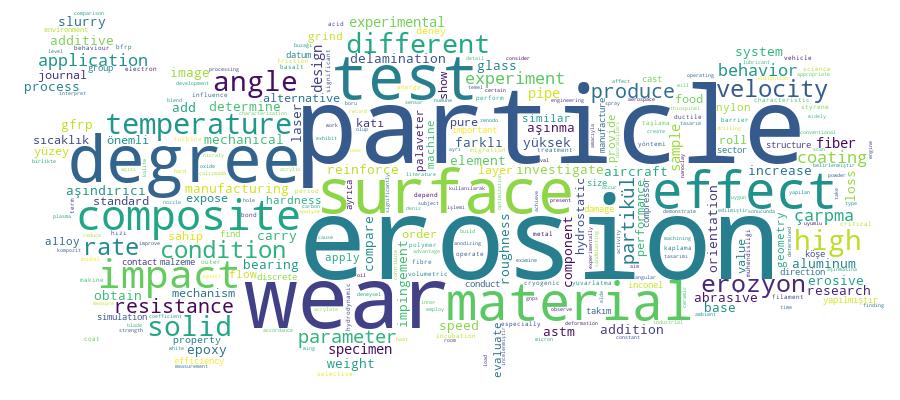
Competency Cloud