Profile URL: https://hdl.handle.net/20.500.13091/11677
Job Title:Dr. Öğr. Üyesi
Email Address:igoktepeli@ktun.edu.tr
Main Affiliation:02.10. Department of Mechanical Engineering
Status: Current Staff
ORCID: 0000-0002-2886-8018
Scopus ID: 57194015600
YÖK Akademik: E368AF9A71A04525
Google Scholar: jgpN43IAAAAJ
Web of Science ID: ABF-7549-2021
Name Variants:
Goktepeli, I. Göktepeli, İ.
32 results
Scholarly Output Search Results
Now showing 1 - 10 of 32
Article Citation - WoS: 14Citation - Scopus: 19Investigation of Heat Transfer Augmentation Between the Ribbed Plates Via Taguchi Approach and Computational Fluid Dynamics(SPRINGER, 2019-05-18) Göktepeli, İlker; Atmaca, Şükrü Ulaş; Çakan, Abdullah; Atmaca, UlasHeat transfer and turbulent flow characteristics between the ribbed plates have been numerically studied in the present paper. The ribs with the rectangular cross-section have been placed on the top and the bottom plates of the duct, symmetrically. It is assumed that the fluid at 300 K has entered the system while the walls kept at 400 K. All numerical analyses have been performed by k-omega Shear Stress Transport (SST) turbulence model for Re = 10000, 15000 and 20000. For the fixed rib width, the dimensionless height and the dimensionless spacing have been respectively varied as 0.1 <= h ' <= 0.3 and 0.5 <= S ' <= 1, and the results have been compared with the ones of the smooth plate. Even though there are twenty-seven cases obtained as a result of parametric combinations, the number of various cases has been reduced from twenty-seven to only nine different variations by applying the Taguchi method. Furthermore, the effects of all the considered parameters on the heat transfer and flow characteristics have been determined in terms of the influence degree. The optimum parameters for Nusselt number and pressure loss have been ascertained individually. What is more, the almost exact values for Nusselt number and pressure loss have also been attained by the confirmation test having an error percentage of 6%. The most dominant factor has been determined as the rib height due to its effect on both heat transfer and flow characteristics. Similarly, with respect to the numerical results, increasing the rib height, the rib spacing and Reynolds number has separately increased Nusselt number. Nevertheless, symmetrical flow structure has been disturbed as a result of ascending the rib height as clearly seen for h ' = 0.3 from the charts. In the meantime, pressure loss has been augmented owing to the increment of the geometrical parameters and also Reynolds number. h ' = 0.1 with S ' = 0.5 at Re = 10000, h ' = 0.2 with S ' = 0.5 at Re = 15000 and h ' = 0.1 with S ' = 0.75 at Re = 15000 can be suggested for the heat transfer enhancement since the pressure loss of the system is tolerated.Other Numerical Examination of Heat Transfer Augmentation Between the Plates With Square Cross-Sectional Ribs for the Staggered Arrangement(2020-11-30) Göktepeli, İlker; Atmaca, Ş. Ulaş; Atmaca, UlasHeat transfer enhancement in the ducts is significantly related with flow separation and reattachment regions. Therefore, ribs are used to obtain the rotational flows in the vicinity of the wall since the fluctuations in the thermal and hydrodynamic boundary layers are effective for the increment of heat transfer by convection. Even though heat transfer surface area is enlarged by placing the ribs into the channels, the pressure loss due to the ribs has to be taken into account and controlled in these systems. Based on the aforementioned explanations, the square cross-sectional ribs have been mounted on the bottom and the top walls of horizontal parallel plates in terms of staggered arrangement. In the present paper, numerical analyses have been conducted via k-? SST turbulence model at Re = 10000, 15000 and 20000 for different spacing values between two successive ribs. For the constant rib dimensions, the ribbed models have been compared by referring to smooth plates as reference model. For this reason; time-averaged results including streamwise velocity components, temperature distributions, pressure values, streamline patterns and Nusselt numbers for the ribbed and the smooth plates have been separately presented and compared. Heat transfer has been enhanced due to the ribs deforming the hydrodynamic and thermal boundary layers. Furthermore, increasing the rib spacing and Reynolds number has enhanced Nusselt number. As observed, heat transfer has also been augmented by extending the distance between two successive ribs since fluid easily penetrates to the sink between them for the production of recirculation regions. However, in case of the ribbed models, there are gradual drop pressure values along the channel. For this reason, the rib effect on these values is much more as evidently observed at Re = 10000.Article Citation - WoS: 7Citation - Scopus: 7Reconstruction of Flow Field With Missing Experimental Data of a Circular Cylinder Via Machine Learning Algorithm(Aip Publishing, 2023-11-01) Aksoy, Muharrem Hilmi; Goktepeli, Ilker; İspir, Murat; Cakan, AbdullahIn this study, artificial neural networks (ANNs) have been implemented to recover missing data from the particle image velocimetry (PIV), providing quantitative measurements of velocity fields. Due to laser reflection or lower intensity of particles in the interrogation area, the reconstruction of erroneous velocity vectors is required. Therefore, the distribution of time-averaged and normalized flow characteristics around a circular cylinder has been demonstrated as streamwise and cross-stream velocities at Re = 8000. These velocity components have been given for different regions at x/D = 0.5, x/D = 1.25, x/D = 2, and y/D = 0. These stations have been chosen to estimate missing data for near-wake, mid-wake, far-wake, and symmetry regions. The missing data ratios (A*) for 0.5 <= x/D <= 2 are A* = 3.5%, 7%, and 10%. In addition, these values are A* = 4%, 8%, and 12% for y/D = 0, while A* = 7.5% for the shaded region. The increment of area positively affects the estimation results for near-wake and mid-wake regions. Moreover, the errors tend to decrease by moving away from the body. At y/D = 0, increasing the area negatively influences the prediction of the results. The mean velocity profiles of predicted and experimental data have also been compared. The missing data have been predicted with a maximum percentage error of 3.63% for horizontal stations. As a result, the ANN model has been recommended to reconstruct PIV data.Article Citation - WoS: 1Citation - Scopus: 1Experimental Flow Control Around Circular Cylinders with Porous Media Coatings(Springer Wien, 2025-08-23) Goktepeli, Ilker; Ispir, Murat; Aksoy, Muharrem HilmiFlow structures have been experimentally obtained for the circular cylinders with porous media coatings (PMC) at Reynolds number values from Re = 5000 to Re = 10,000. Furthermore, flow characteristics have been exhibited for different contour graphics and the velocity profiles have been indicated at four downstream stations. The regions having minimum streamwise velocity component values approached the circular cylinders by increasing Reynolds numbers. Nevertheless, it is not valid for the cases of PMC1 and PMC2 from Re = 7500 to Re = 10,000. Because of the separated flows from the upper and lower cylinder surfaces, the maximum streamwise velocity components have been attained. The same effect has been observed for the cross-stream velocity component values, and these clusters approached the circular cylinders. As expected, the flow separations caused wake fluctuations. Nonetheless, the cluster sizes have also been decreased by the decrement of Reynolds numbers. It is significant for the occurrence of turbulence intensity in the wake regions of the circular cylinders. However, there is no obvious difference between the bare cylinder and the PMC3 in terms of flow patterns. Another important result is that the coating effect is explicitly exhibited by the increase in Reynolds numbers. As explained by the velocity values, these zones moved away from the bodies due to the decrement of Reynolds numbers. As a parameter, Reynolds number is considerably dominant on the cluster positions. Similar patterns have been approximately observed for PMC1, PMC2 and PMC4 in terms of Reynolds stress correlations.Article Flow Patterns Around a Sphere in Terms of Wall Proximity(Sakarya University, 2025) Goktepelı, Ilker; Aksoy, Muharrem Hilmi; Ispir, MuratFlow over a sphere exhibits three-dimensional phenomena even at lower values of Reynolds number (Re). Nonetheless, three-dimensional flow structures may also be affected by boundary layers on the rough walls. For this reason, the effects of wall proximity are very significant for the present case. Regarding these issues, flow characteristics of a sphere have been examined for several gap ratios from G* = 0.01 to G* = 2 at Re = 250. The influence of jet flow between the sphere and the wall has increased by decreasing the gap ratio. Although symmetrical flow patterns have been observed for G* = 1 and G* = 2, this situation is not valid for G* ≤ 0.5 in the present study. It is clearly observed in the wake regions for G* ≤ 0.25 and the positive cross-stream velocity components become more dominant, especially for G* = 0.1 and G* = 0.25, respectively. The positive spanwise vorticity component becomes more dominant; however, the negative one is more dominant for G* ≤ 0.1 in terms of gap ratios. For the case of G* ≤ 0.05, the drag coefficients are less than CD = 0.47 and these values are so close to each other. For G* = 0.1, it is around CD = 0.5 for the present problem. By increasing the gap ratios, drag coefficient values also indicated an increasing trend. Moreover, CD = 0.579 has been attained for the case of G* = 0.25 and it is approximately CD = 0.68 for G* = 0.5 as observed. On the other hand, the values of G* = 1 and G* = 2 approached the values of the uniform flow conditions and the effect of the wall proximity by the boundary layer of the bottom surface disappeared.Article PIV Investigation of Flow Structures Around Rotating Circular Cylinders with Dimpled Surfaces(Springer, 2026) Goktepeli, Ilker; Ispir, Murat; Kurtulmus, Nazim; Aksoy, Muharrem HilmiFlow around rotating cylinders with dimples has been evaluated at a Reynolds number of Re = 2000. It has been determined since the rotational influence was more effective for lower Re values. Angular dimple distributions have been considered as 15 degrees <= beta <= 60 degrees. Different rotation rates have also been evaluated from alpha = 0 to alpha = 1.26 as lower rotation rates for the current Re were significant to suppress the vortex shedding. Particle Image Velocimetry (PIV) results have been compared by those of a bare cylinder. The wake regions have been shrunk due to dimpled surfaces. Excluding the case of alpha = 0.42 for a bare cylinder (4.5%), the regions had tendency to approach the bodies. The highest displacement (-78.9%) to the cylinder has been attained for beta = 15 degrees with alpha = 1.26 as observed. The lowest value (-5.6%) has been obtained by alpha = 0.42 for beta = 45 degrees by approaching the cylinder. For the influence of passive flow control, the cases without rotation have been regarded and beta = 60 degrees was more dominant. For the wake lengths, the changes for F and S locations have also been exhibited in the wake regions as these points affecting the length of recirculation bubble were substantial. As interpreted from the vorticity results, peak values were more dominant in the cylinder wakes. Since the rotation rates were increased, these regions tended to shrink. It is related to the presence of fluctuations in the wake regions. The displacements of maximum turbulence kinetic energy values have been shown for the level of turbulence intensity. Turbulent intensity has been enhanced in the regions closer to the bodies except the stationary cases of beta = 30 degrees and beta = 45 degrees. Nevertheless, the forced rotation was more effective.Article Citation - WoS: 3Citation - Scopus: 5Examination of Air Flow Characteristics Over an Open Rectangular Cavity Between the Plates(Sage Publications Inc, 2023-06-01) Göktepeli, İlker; Atmaca, UlaşAir flow characteristics of an open cavity have been numerically examined by using different turbulence models of Detached Eddy Simulation (DES), k-& epsilon; Realizable, k-& omega; Shear Stress Transport (SST) and Large Eddy Simulation (LES) based on an experimental study of open literature. Numerical results of transient analyses have been compared to experimental results at cavity length-based Reynolds number of Re = 4600. Pressure distributions, streamline patterns, streamwise velocity components, mean velocity values and their vectors have been given in terms of contour graphics. Moreover, velocity profiles have been presented. Pressure fluctuations have been triggered by flow separation and its reattachment. Due to upstream separation of boundary layer, there was curved boundary layer obtained between the outer potential-flow-like and the recirculation zones. As a result, negative velocity values are evidence for rotational flows affected by formation of secondary flows in the cavity. Furthermore, lower pressure region has been observed as a result of rotational flow which was powerful in the open cavity. Numerical results of DES and LES turbulence models are in good agreement with the results of reference study. As the numerical results obtained by LES turbulence model are approximately same with those of experimental reference study, LES turbulence model is mostly recommended. As an option to these turbulence models, k-& omega; SST model could be utilized for limited computer capacity. However, k-& epsilon; Realizable model is not sufficient for capturing rotational flows which are very effective in terms of present case.Article Rotation Rate Influence on Flow Around Porous Media Coated Circular Cylinders(Isfahan University of Technology, 2026) Ispir, M.; Goktepeli, I.; Aksoy, M. H.; Goktepeki, I.Experimental rotation effects on flow past cylinders have been observed. The cylinders have the porous media coatings (PMC) named PMC1, PMC2, PMC3 and PMC4. For the range of rotation rates, including alpha = 0.52, alpha = 1.05 and alpha = 1.57, the flow characteristics have been presented at a Reynolds number of Re = 2500. In comparison with the experimental results for stationary cases (alpha = 0), the zones with lower streamwise velocity values became closer to the bodies as the rotation rates were enhanced. The maximum wake displacements have been obtained as 1.8D for the circular cylinder with no coating. For coated cylinders, these are 1.9D, 1.9D, 1.7D and 1.95D for the PMC1, PMC2, PMC3 and PMC4, respectively. For the same reason, the cross-stream velocity components also approached the circular cylinders. However, asymmetrical distributions for flow patterns have been attained. For this reason, the lower values for cross-stream velocity became more dominant in the wake. Moreover, separated flows were obviously seen by velocity fluctuations. The interaction of separated and wake flows induced these fluctuations. Wake lengths have been reduced compared to those of the cases with no rotation. The highest percentage for wake length reduction has been obtained as 92.9% by alpha = 1.05 for the bare cylinder. The maximum reductions have been attained as 89.7% by alpha = 1.05 for PMC1, 96.3% by alpha = 1.05 for PMC2, 85.7% by alpha = 1.57 for PMC3 and 90% by alpha = 1.05 for PMC4. The experimental results have also been presented for turbulence values. The highest turbulence kinetic energy value, 0.236, has been obtained at alpha = 1.05 for the bare cylinder. These values are 0.271 at alpha = 0.52 for the PMC1, 0.271 at alpha = 1.05 for PMC2, 0.245 at alpha = 1.05 for the PMC3 and 0.217 at alpha = 0.52 for the PMC4. As with the flow patterns, the induction by surface coating has been clearly observed through the augmentation of alpha values. Since surface movement for coating has also been seen for these situations, boundary layer thickness values have been reduced.Article Citation - WoS: 1Citation - Scopus: 1Drag Reduction by the Effect of Rounded Corners for a Square Cylinder(Aip Publishing, 2024-09-01) Göktepeli, İlkerFlow around square cylinders has been studied via unsteady simulations done at a Reynolds number of Re = 100. In the present study, the effects of rounded corners on different flow characteristics have been evaluated. The main influence of rounded corners has been considered for various ratios (r*) up to 0.45 in terms of drag coefficient values. Flow stagnation points have been obtained in front of the square cylinders. These points constitute the maximum pressure. The cluster sizes for cross-stream velocity components are nearly the same. Viscous flow generates vortices around the top and bottom edges of the square cylinder. The produced vortices have been affected by the wake region. When moving away from the bodies, streamwise velocity profiles have been influenced by the variation of the rounded corner ratios. The wake region has shrunk owing to the rounded corners, and the drag reduction has been provided. The drag coefficient (CD) has been obtained as 1.418 for r* = 0. As a result of increasing the ratio for the rounded corners, drag coefficients decreased for the square cylinders. The percentage values are 4.6%, 7.2%, 8.4%, 9.6%, 11.1%, 11.9%, 12.5%, 13.3%, and 14.3% for the drag decrement from r* = 0.05 to r* = 0.45 when compared to the reference value. The most effective value for drag reduction has been attained as 4.6% for the ratio of rounded corners in a row. Even though the decrement percentage tends to increase by enhancing the ratio of the rounded corners, the increment rate indicates the decreasing trend.Article Numerical Modeling of Backward-Facing Step Flow Via Computational Fluid Dynamics(2023) Göktepelı, Ilker; Atmaca, UlaşAs a fundamental case for problems of fluid mechanics, examination of flow separation and its reattachment is important for engineering applications. Considering the significance of the subject, backward-facing step flow has been modeled via Computational Fluid Dynamics (CFD) based on an experimental study previously done at Re = 5000. Steady simulations have been conducted by k-ε Renormalization Group (RNG) considering the same flow conditions of the reference study. Pressure distributions, streamwise and cross-stream velocity components, velocity magnitude values with streamline patterns and turbulence kinetic energy values have been presented by using contour graphics. Furthermore, the stations for pressure distributions, velocity profiles for streamwise components and turbulence kinetic energy values have been defined for evolution of related data. Lower pressure zone for the wake region of the backward-facing step has been attained due to flow separation. Separation of the upstream boundary layer has been seen and it became a curved one. Moreover, turbulence level of the step wake has been obtained as higher than those of any other points. Transition to core flow has been attained at y* = 1.1 that is above the step height. Flow oscillations have been observed for x* ≥ 2 and y* ≤ 1 since the fluctuations for these values were effective in the wake region. To sum up, the dimensionless reattachment length has been numerically obtained as 5.92 which is very good agreement with the experimental results at same Reynolds number. The deviation from the reference results is from 0.34 % to 1.33 %.
Research Topics
Domains
Physical Sciences
Fields
EngineeringEnvironmental Science
Subfields
Computational MechanicsAerospace EngineeringEnvironmental EngineeringMechanical Engineering
Specific Research Areas
Fluid Dynamics and Vibration Analysis
Aerodynamics and Fluid Dynamics Research
Fluid Dynamics and Turbulent Flows
Wind and Air Flow Studies
Heat Transfer Mechanisms
Sustainable Development Goals
 7
AFFORDABLE AND CLEAN ENERGY
2
Research Products

Documents
18
Citations
176
h-index
7

Documents
14
Citations
143
Publication Collaboration
| Affiliation Name | Count |
|---|---|
| Konya Technical University | 31 |
| Adana Science and Technology University | 4 |
| Selçuk University | 3 |
| Laboratoire d'Innovation Thérapeutique | 1 |
| Istanbul Technical University | 1 |
1 / 2
Data obtained from OpenAlex
| Journal | Count |
|---|---|
| Physics of Fluids | 3 |
| Ocean Engineering | 2 |
| Firat University Journal of Experimental and Computational Engineering (Online) | 1 |
| Flow Measurement and Instrumentation | 1 |
| Flow Turbulence and Combustion | 1 |
Current Page: 1 / 6

Scholarly Output
32
Articles
31
Views / Downloads
50/45
Supervised MSc Theses
0
Supervised PhD Theses
0
WoS Citation Count
97
Scopus Citation Count
112
Patents
0
Projects
0
WoS Citations per Publication
3.03
Scopus Citations per Publication
3.50
Open Access Source
14
Supervised Theses
0
Scopus Quartile Distribution
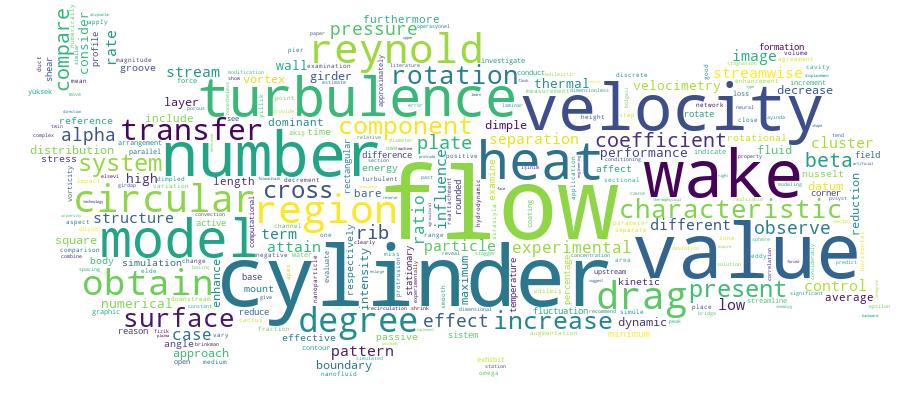
Competency Cloud