Profile URL: https://hdl.handle.net/20.500.13091/11665
Job Title:Dr. Öğr. Üyesi
Email Address:eesme@ktun.edu.tr
Main Affiliation:10.02. Department of Software Engineering
Status: Current Staff
ORCID: 0000-0001-9012-6587
Scopus ID: 57189468408
YÖK Akademik: E279A58A5B8D4844
Google Scholar: Le-ePkwAAAAJ
Web of Science ID: CNX-2824-2022
Name Variants:
Esme, Engin
13 results
Scholarly Output Search Results
Now showing 1 - 10 of 13
Review Citation - WoS: 7Citation - Scopus: 4A Literature Review on Deep Learning Algorithms for Analysis of X-Ray Images(SPRINGER HEIDELBERG, 2023) Seyfi, Gökhan; Esme, Engin; Yılmaz, Merve; Kıran, Mustafa ServetSince the invention of the X-ray beam, it has been used for useful applications in various fields, such as medical diagnosis, fluoroscopy, radiation therapy, and computed tomography. In addition, it is also widely used to identify prohibited or illegal materials using X-ray imaging in the security field. However, these procedures are generally dependent on the human factor. An operator detects prohibited objects by projecting pseudo-color images onto a computer screen. Because these processes are prone to error, much work has gone into automating the processes involved. Initial research on this topic consisted mainly of machine learning and methods using hand-crafted features. The newly developed deep learning methods have subsequently been more successful. For this reason, deep learning algorithms are a trend in recent studies and the number of publications has increased in areas such as X-ray imaging. Therefore, we surveyed the studies published in the literature on Deep Learning-based X-ray imaging to attract new readers and provide new perspectives.Doctoral Thesis Geleneksel Kent Dokusunun Veri Madenciliği Yöntemiyle Analizi ve Yeni Yapı Tasarımları için Yapay Zekaya Dayalı Bir Model Önerisi(Konya Teknik Üniversitesi, 2024) Tazefidan, Ceyhan; Başar, Mehmet Emin; Eşme, EnginKentler, karmaşık ve kuralsız gibi görünen yapılarının altında coğrafik, iklimsel, sosyo-kültürel, ekonomik vb. çeşitli faktörlerin oluşturduğu kurallar doğrultusunda işleyen ve yaşayan sistemlerdir. Kente ait olan bu yapı, onu meydana getiren parçaların birbirleriyle olan ilişkilerinin çözümlenmesi ve bir kural sisteminin bulunması ile açığa çıkmaktadır. Bu kural sisteminin oluşturulmasında ise somut ve somut olmayan kültürel miras ögelerinden yararlanılmaktadır. Ancak zaman içerisinde kültürel miras anlamında kayıplar verilmekte ve bu ögeler çoğu zaman kaybolma tehlikesi ile karşı karşıya kalmaktadır. Kentlerin karmaşık yapılarına ilişkin mevcut bilgilerimizi arttırarak kentlerle ilgili müdahale süreçlerinde daha bilinçli ve bilgiye dayalı kararlar üretebilmek kent araştırmaları bağlamında önemlidir. Geniş ölçekli hesaplama sistemleri (large-scale computing) yeni nesil veri toplama ve analiz etme teknikleri kent araştırmaları alanında yeni olanaklar sunmaktadır. Günümüzde teknolojinin de gelişmesiyle birlikte her geçen gün daha fazla veri elde edilebilmekte ve disiplinler arası çalışmalarda bu verilerden ortaya çıkabilecek faydalı bilgilerin keşfi için veri madenciliği ve yapay zekaya dayalı yöntem ve teknikler kullanılmaktadır. Kentleri işlenmemiş verilerden oluşan birer veri tabanı olarak düşünecek olursak bu ham veriler veri madenciliği yardımıyla işlenerek kentsel sorunların çözümlenmesi bağlamında kentler için faydalı olabilecek kullanılmaya elverişli bilgilere dönüştürülebilecektir. Böylelikle hesaplamalı bilim ve mühendislik alanlarındaki önemli gelişmeler, kentsel veri analizi anlamındaki çalışmalarda çözüme ulaşma konusunda yardımcı olabilecektir. Bu sayede ortaya çıkacak olan algoritmalar yardımıyla karmaşık görünen kent yapılarının ve kural sisteminin çözümlenerek basite indirgenebilmesi sağlanacaktır. Günümüze kadar bütüncül bir biçimde korunabilmiş geleneksel kent dokularında yapılacak olan yeni yapı tasarımları için karar vericiler ve tasarımcılara destek olabilecek hesaplamalı bir model ve yazılım üretmek çalışmanın temel amacını oluşturmaktadır. Geleneksel kent dokuları, sahip oldukları kültürel değerleri, yaşam tarzları ve geçmişin izlerini yansıtan yere ait tüm diğer özellikleri ile korunmaya ihtiyaç duymaktadırlar. Kültürel miras değeri taşıyan bu kentlerde kültür mirası anlamında sürdürülebilirliğin sağlanabilmesi adına üç temel yaklaşım konusu öne çıkmaktadır. Bunlardan birincisi yapılaşma için seçilen yere ait özelliklerin belirlenmesi, ikincisi o yerde bulunan mevcut yapıların yeniden nasıl değerlendirileceği problemi, üçüncü ve son olarak ise tarihi sit alanı içerisinde yapılacak olan yeni yapıların tasarımı konusudur. Bu üç temel yaklaşımın da birbirinden bağımsız düşünülmemesi gerekmektedir. Yeni ihtiyaçlar doğrultusunda gerçekleştirilecek olan yapı tasarımları, dokunun iyi analiz edilmesini gerektirmektedir. Geleneksel dokularda yeterli analizin yapılmaması durumunda hatalı kararlar alınabilmektedir. Bu yapıların tasarlanmasında rol oynayan tasarımcıların tek başına bu analizi gerçekleştirebilmesi mümkün değildir. Bu nedenle yeni yapı tasarımları için kente dair özniteliklerin tespit edilmesi ve öznitelik değerlerinin birbiriyle olan ilişkisinin de hızlı bir şekilde çözümlenmesi gereklidir. Burada hem zaman hem de maliyet bakımından faydalı olabilecek tasarım araçlarına ihtiyaç duyulmaktadır. Günümüz teknolojilerinin gelişmesi ve veri boyutunun artmasıyla birlikte veri madenciliği ve yapay zeka gibi araçlar bu konularda çalışan bireylere zaman kazandırmaktadır. Farklı medeniyetlere ev sahipliği yapmış tarihi ve mimari dokusuyla önemli bir geleneksel kent örneği olan Konya iline bağlı Sille Mahallesi çalışmanın uygulama alanı olarak seçilmiştir. Alan çalışmasında mimari koruma disiplinine uygun olarak tarihi doku içerisinde bulunan 62 ada 541 adet parselde 2. grup kültür varlığı olan toplam 263 adet sivil mimarlık yapısının sahip olduğu öznitelik değerleri yapı bilgi formları hazırlanarak bir veri tabanında toplanmıştır. Veri madenciliği ve yapay zekaya dayalı tekniklerle yapılara dair veri analizleri gerçekleştirilmiş ve Matlab'da hazırlanan bir uygulama ile yeni yapı tasarımları için karar vermeye yardımcı olabilecek birliktelik kuralları elde edilmiştir. Ayrıca bu birliktelik kurallarından yola çıkılarak kentsel yenileme sınırları içerisinde yer alan 34 adet boş parselde yeni yapı tasarımına yönelik kütle gabarisi için alternatifler sunulmuştur. Böylelikle yere özgü olan kente dair veriler kullanılarak geleceğe dönük yeni yapı üretiminde geçmişin izlerinden yararlanmaya ve kentsel belleğin sürdürülebilirliğine de katkı sağlamaya çalışılmıştır.Conference Object Citation - Scopus: 1The Performance Analysis of Extreme Learning Machines on Odour Recognition(ASSOC COMPUTING MACHINERY, 2018-08-03) Eşme, Engin; Kıran, Mustafa ServetExtreme Learning Machine (ELM) is a single hidden layer feed-forward neural network learning method, which has a high generalization performance as well as faster. In this paper, odour data is discriminated based on the sensor response curve by using ELM, and the main objective is to investigate the optimum number of nodes in the hidden layer of ELM for olfactory detection. The relationship between the number of nodes in the hidden layer and the number of attributes or classes of dataset is queried to achieve the goal. Three odour datasets taken from different sources in literature and two transfer functions for the ELM are used to verify the results of the study. The backpropagation (BP) algorithm is also used for training an artificial neural network for comparison purposes. The analysis is performed for the three datasets by using ELM and BP and obtained results present that the time consumption of ELM is too small to be compared with BP even though the number of nodes is high and better accuracy rates are obtained by ELM.Conference Object Mimarlık Alanında Yapay Zeka Uygulamalarının Kullanımına Yönelik Bir Literatür Araştırması(Art and Design, 2022) Tazefidan, Ceyhan; Eşme, Engin; Başar, Mehmet Eminİnsan davranışlarını taklit eden sistemler olarak tanımlanan yapay zekâ uygulamaları her geçen gün insan yaşamını geliştiren, değiştiren ve kolaylaştıran yeni teknolojiler sunmaktadır. Yüksek hesaplama gücü gerektiren karmaşık problemlerin değişkenleri arasındaki ilişkileri kısa sürede analiz edebilmesinin yanı sıra geleceğe yönelik farklı stratejiler geliştirme imkânı da verebilmesi akıllı sistemleri her türlü disiplinde vazgeçilmez bir araç haline getirmektedir. Bu sebeple toplumsal ve sektörel ihtiyaçlara akıllı teknolojilerin entegrasyonuyla çözüm bulmanın günümüzde önemli bir katma değer sağladığı reddedilemez. Herhangi bir mimari probleminin çözümü için de çözüme yönelik veriler toplamak, elde edilen veriler doğrultusunda tasarım alternatifleri üretmek ve bu alternatiflerden çözüme en uygun tasarımı seçmek gerekmektedir. Bu açıdan mimarlık alanında da tasarımsal, mekânsal, kentsel vb. farklı problemlere yapay zekâya dayalı uygulamalar ile etkin çözümler üretilebilmektedir. Veri madenciliği ve makine öğrenmesi gibi nesnel araçların kullanılması özellikle karar verme sürecinde hem zaman hem de maliyet açısından tasarruf edilmesine ve tasarımcıların farklı tasarım alternatifleri oluşturmasına yardımcı olmaktadır. Bunun yanı sıra yakın gelecekte akıllı yazılımların ürettiği tasarımların, tasarımcıların çalışmalarının ciddi bir parçası haline geleceği de öngörülmektedir. Bu bağlamda mimarların en son teknik çözümler hakkında bilgi sahibi olmaları gerekmektedir. Bu çalışma, literatüre dayalı olarak mimarlık alanında ve uygulamalarında yapay zekâya dayalı çözümlerin genel bir incelemesini sunmayı amaçlamaktadır. Çalışma sonucunda yapay zekâ uygulamalarının mimarlık alanındaki katkıları ve bu katkıların mimari tasarım süreçlerindeki etkileri irdelenmiştir.Article Citation - Scopus: 1A K-Elm Approach To the Prediction of Number of Students Taking Make-Up Exams(Gazi Univ, Fac Engineering Architecture, 2021-11-10) Kıran, Mustafa Servet; Sıramkaya, Eyup; Esme, EnginPurpose: The main objective of this study is to present a novel problem, and novel methodology to solve this problem. The problem is to predict the number of students who fail the course and will join the make-up exams. Theory and Methods: The number of students who fail the course should take a make-up exam, but some of them do not join these exams due to internal or external motivations, and this causes waste of resources. Majority of voting-based extreme learning machines have been proposed to solve the problem, and the ELM parameters have been optimized by artificial bee colony algorithm. Results: The proposed approach shows better performance than the extreme learning machines in terms of classification accuracy. Conclusion: Before the scheduling make-up exams, the number of students who will join the exams should be predicted by the proposed or similar approaches in order to use resources efficiently.Article Citation - WoS: 8Citation - Scopus: 10X-Ray Image Analysis for Explosive Circuit Detection Using Deep Learning Algorithms(Elsevier Ltd, 2024-01-01) Seyfi, G.; Yilmaz, M.; Esme, E.; Kiran, M.S.X-ray imaging technologies find applications across various domains, including medical imaging in health institutions or security in military facilities and public institutions. X-ray images acquired from diverse sources necessitate analysis by either trained human experts or automated systems. In cases where concealed electronic cards potentially pose threats, such as in laptops harboring explosive triggering circuits, conventional analysis methods are challenging to detect, even when scrutinized by skilled. The present investigation is centered on the utilization of deep learning algorithms for the analysis of X-ray images of laptop computers, with the aim of identifying concealed hazardous components. To construct the dataset, some control cards such as Arduino, Raspberry Pi and Bluetooth circuits were hidden inside the 60 distinct laptop computers and were subjected to X-ray imaging, yielding a total of 5094 X-ray images. The primary objective of this study is to distinguish laptops based on the presence or absence of concealed electronic cards. To this end, a suite of deep learning models, including EfficientNet, DenseNet, DarkNet19, DarkNet53, Inception, MobileNet, ResNet18, ResNet50, ResNet101, ShuffleNet and Xception were subjected to training, testing, and comparative evaluation. The performance of these models was assessed utilizing a range of metrics, encompassing accuracy, sensitivity, specificity, precision, f-measure, and g-mean. Among the various models examined, the ShuffleNet model emerged as the top-performing one, yielding superior results in terms of accuracy (0.8355), sensitivity (0.8199), specificity (0.8530), precision (0.8490), f-measure (0.8322), and g-mean (0.8352). © 2023 Elsevier B.V.Article Feature Fusion Using Deep Learning Algorithms in Image Classification for Security Purposes by Random Weight Network(MDPI, 2025-08-17) Kiran, Mustafa Servet; Seyfi, Gokhan; Yilmaz, Merve; Esme, Engin; Wang, XizhaoAutomated threat detection in X-ray security imagery is a critical yet challenging task, where conventional deep learning models often struggle with low accuracy and overfitting. This study addresses these limitations by introducing a novel framework based on feature fusion. The proposed method extracts features from multiple and diverse deep learning architectures and classifies them using a Random Weight Network (RWN), whose hyperparameters are optimized for maximum performance. The results show substantial improvements at each stage: while the best standalone deep learning model achieved a test accuracy of 83.55%, applying the RWN to a single feature set increased accuracy to 94.82%. Notably, the proposed feature fusion framework achieved a state-of-the-art test accuracy of 97.44%. These findings demonstrate that a modular approach combining multi-model feature fusion with an efficient classifier is a highly effective strategy for improving the accuracy and generalization capability of automated threat detection systems.Article Predicting the Relationship Between Consumer Buying Behavior (CBB) and Consumption Metaphor (CM) Through Machine Learning (ML)(Sciendo, 2025-03-01) Koyluoglu, Alaaddin Selcuk; Esme, EnginThe use of machine learning (ML) in the field of marketing has recently gained momentum in parallel with the development of technology. ML not only enables customers to predict their digital actions but also supports targeting the right customers with the best content at the right time. The study aims to predict the relationship between consumer buying behavior (CBB) and consumption metaphor (CM) through ML. In this context, the application of the study was built on two scenarios. In the first scenario, CBB is associated with the CM to confirm the ML estimation. In the second scenario, it is aimed that ML both predicts CBB and estimates and confirms the effect of CM on CBB. As a result, the k-nearest neighbors algorithm was able to predict consumers at the rate of 91.02% accuracy and predict consumers who do not intend to have tattoos at the rate of 90.98%. When the CM is considered, ML predicted consumers at the rate of 78.33% accuracy, and predicted consumers who do not tend to buy at the rate of 79%.Article A Deep Learning Ensemble Approach for X-Ray Image Classification(Konya Teknik Univ, 2024) Esme, Engin; Kıran, Mustafa ServetThe application of deep learning-based intelligent systems for X-ray imaging in various settings, including transportation, customs inspections, and public security, to identify hidden or prohibited objects are discussed in this study. In busy environments, x-ray inspections face challenges due to time limitations and a lack of qualified personnel. Deep learning algorithms can automate the imaging process, enhancing object detection and improving safety. This study uses a dataset of 5094 x-ray images of laptops with hidden foreign circuits and normal ones, training 11 deep learning algorithms with the 10-fold cross-validation method. The predictions of deep learning models selected based on the 70% threshold value have been combined using a meta-learner. ShuffleNet has the highest individual performance with 83.56%, followed by InceptionV3 at 81.30%, Darknet19 at 78.92%, DenseNet201 at 77.70% and Xception at 71.26%. Combining these models into an ensemble achieved a remarkable classification success rate of 85.97%, exceeding the performance of any individual model. The ensemble learning approach provides a more stable prediction output, reducing standard deviation among folds as well. This research highlights the potential for safer and more effective X-ray inspections through advanced machine learning techniques.Article Citation - WoS: 1Citation - Scopus: 1Enhancing Classification Accuracy Through Feature Extraction: a Comparative Study of Discretization and Clustering Approaches on Sensor-Based Datasets(Springer London Ltd, 2023-08-27) Esme, EnginAccuracy in a classification problem is directly related to the ability of features to adequately represent the differences between classes. In sensor-based datasets, measurements taken from the sensor form feature vectors. Measuring a given physical signal with different sensors enables it to be expressed with various feature vectors. For this reason, using sensor fusion is preferred in data acquisition. However, each new sensor added to the system brings problems such as complex sensory and supply circuit structures, extra energy consumption, signal sampling complexity, and time-consumption. On the other hand, in cases where sensor fusion cannot be applied, the ability of data from one sensor to represent classes may be insufficient. To avoid these problems, discretization and clustering approaches are suitable to derive more features from fewer sensors. The aim is to improve the accuracy of classifiers by deriving new feature vectors that can represent sensor data. This research reveals the contributions of clustering and discretization approaches as feature extraction methods to improve classification accuracy. In this study, three widely used machine learning techniques are investigated on Perfume, Wine, Seeds, and Gas datasets from the UCI repository. This comprehensive empirical study indicates that the accuracy of classifiers improves by up to 20% on datasets obtained from some sensors by using both discretization and clustering as feature-extracting methods.
Research Topics
Domains
Physical SciencesHealth Sciences
Fields
Computer ScienceEngineeringMedicineChemistry
Subfields
Artificial IntelligenceBiomedical EngineeringRadiology, Nuclear Medicine and ImagingElectrical and Electronic EngineeringAnalytical Chemistry
Specific Research Areas
Machine Learning and ELM
Advanced Chemical Sensor Technologies
COVID-19 diagnosis using AI
Gas Sensing Nanomaterials and Sensors
Spectroscopy and Chemometric Analyses
Sustainable Development Goals
 2
ZERO HUNGER
1
Research Products

Documents
11
Citations
72
h-index
4

Documents
11
Citations
63
Publication Collaboration
| Affiliation Name | Count |
|---|---|
| Konya Technical University | 10 |
| Selçuk University | 7 |
| Gümüşhane University | 1 |
| Shenzhen University | 1 |
| KTO Karatay University | 1 |
1 / 2
Data obtained from OpenAlex
| Journal | Count |
|---|---|
| International Journal of Machine Learning and Cybernetics | 2 |
| Applied Soft Computing | 1 |
| Gazi Üniversitesi Fen Bilimleri Dergisi Part C: Tasarım ve Teknoloji | 1 |
| INTERNATIONAL JOURNAL OF MACHINE LEARNING AND CYBERNETICS | 1 |
| Journal Of The Faculty Of Engineering And Architecture Of Gazi University | 1 |
Current Page: 1 / 2

Scholarly Output
13
Articles
10
Views / Downloads
60/42
Supervised MSc Theses
0
Supervised PhD Theses
1
WoS Citation Count
34
Scopus Citation Count
40
Patents
0
Projects
1
WoS Citations per Publication
2.62
Scopus Citations per Publication
3.08
Open Access Source
6
Supervised Theses
1
Scopus Quartile Distribution
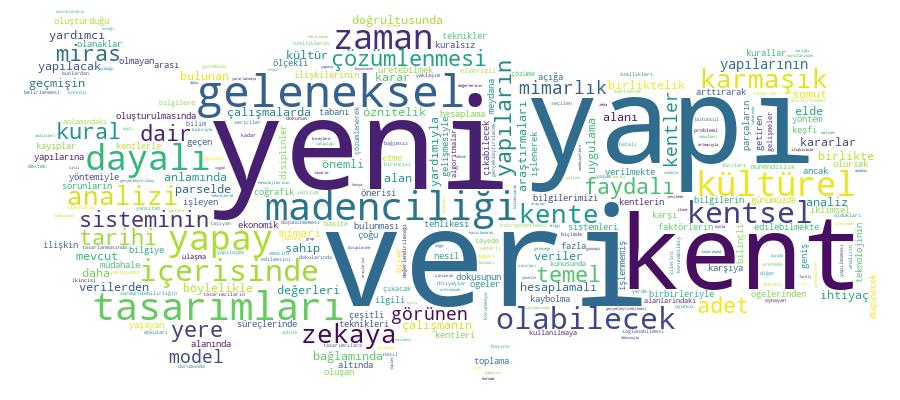
Competency Cloud