Profile URL: https://hdl.handle.net/20.500.13091/11572
Email Address:zcayturan@ktun.edu.tr
Main Affiliation:02.06. Department of Environmental Engineering
Status: Former Staff
ORCID: 0000-0001-9513-4949
Scopus ID: 57204971317
 YÖK Akademik: AAD152FE63B133C2
Google Scholar: qxtuXpQAAAAJ
Web of Science ID: K-5835-2019
Name Variants:
Ayturan, Z. C. Ayturan, Z. Cansu
20 results
Scholarly Output Search Results
Now showing 1 - 10 of 20
Article STATISTICAL ANALYSIS AND EVALUATION OF PM CONCENTRATIONS DURING THE DUST STORMS AT MAY 2020 FOR SELÇUKLU DISTRICT OF KONYA CITY, TURKEY(Uludağ Üniversitesi, 2021-08-20) Kunt, Fatma; Dursun, Şükrü; Ayturan, Zeynep CansuDust storms are widespread events that occur several times a year and spread over many countries of the world relating the wind direction and speed. Especially particulate matter (PM) is the main pollutant spread over by these storms. Because of the dust storms, PM concentrations increase rapidly in the areas found on the way of dust storm passes In this study, statistical evaluation was made accordingly the PM data measured with personal measurement device in Selçuklu District of Konya and the meteorological and the air pollution data provided from air quality monitoring station, which is affiliated by the Ministry of Environment and Urbanization, located nearby. Pearson correlation test has been applied to both data sets and a significant relationship has been detected between the measured and provided data. Moreover, multiple linear regression was applied to the data for $PM_{2.5}$ and $PM_{10}$ separately. Adjusted $R^2$ of the analysis has been found as 0.573 and 0.559 respectively for $PM_{2.5}$ and $PM_{10}$ which explains almost half of the relationship between PM and meteorological variables. The highest positive effect on PM pollution was determined as air temperature. Finally, principal component analysis (PCA) was applied to both data and 4 different principal components were detected. Measured $PM_{2.5}$ and $PM_{10}$, air temperature, and relative humidity were clustered at the same component group.Conference Object Homemade Dip Coating Machine for Thin Films(Sage Publication, 2019) Ayturan, Zeynep Cansu; Ayturan, Yasin Akın; Dalkılıç, Emre; Dursun, ŞükrüIn recent years, the use of thin films for several purposes has been increased rapidly. The performance of thin film coated on the material is related to the sensitivity of electronic dip coating devices. Especially, the differences in production techniques and production conditions reveal many features in thin films. With the development of technology, new production technologies and techniques that may be alternative to each other in the production of thin films have been emerged and developed. Although the sol-gel dipping method does not have a very old history, it has been an important technique for gaining new properties to glass and ceramics. In this study, the production, software, design and sensitivities of the device used in dip coating technique, which is one of the sol - gel coating techniques, were taken as the main issues. A new device has been developed to coat glass sheets of 50 cm long and produce substantially transparent conductive layers. In this new device, glass carrier arm is used to dipping them into a solution at a certain speed, waiting certain time period and removing them at the same speed in order to coat the surface with the colloidal suspensions formed by the solid particles in the prepared liquid named as sol. The device has been designed in laboratory environment, the software has been developed for arranging speed and waiting time period with manual and Bluetooth control. The performance of homemade dip coating device was evaluated according to optic and atomic force microscopy images and thin film thickness determined with special equation. According to the results, the film thickness of coated samples was almost 7 micrometres and the surface of the films was observed smooth with cracks.Article Güneydoğu Anadolu Bölgesindeki İllerin Kuraklık Analizi(Konya Technical University, 2019) Tuğrul, Türker; Doğan, Selim; Dursun, Şükrü; Ayturan, Zeynep CansuBu çalışmada Güneydoğu Anadolu Bölgesindeki illerin kuraklık analizi yapılmıştır. Çalışmada 9 istasyondan alınan 1960-2016 yılları arasındaki aylık toplam yağış verileri kullanılmıştır. Analiz için en az 30 senelik kesintisiz veri setine ihtiyaç duyulmaktadır. Bu koşul Şırnak istasyonunda sağlanamamıştır. Analizde Efektif Kuraklık İndeksi (EKİ) yönteminden yararlanılmıştır. Çalışma sonucunda Adıyaman istasyonunda 22, Batman istasyonunda 15, Diyarbakır istasyonunda 24, Gaziantep istasyonunda 25, Kilis istasyonunda 20, Mardin istasyonunda 9, Siirt istasyonunda 18, Şanlıurfa istasyonunda 21 olmak üzere toplamda 154 kuraklık olayı tespit edilmiştir. 1970-1979 dönemi kuraklık olaylarının en fazla yaşandığı dönemdir. Analiz yapılan 681 aylık zaman periyodu göz önüne alındığında; bu periyotta tüm zamanların ortalama %19’luk zaman diliminin bölgeyi etkileyen kuraklıklarla geçtiği belirlenmiştir.Article Citation - WoS: 19Citation - Scopus: 26Short-Term Prediction of Pm2.5 Pollution With Deep Learning Methods(GLOBAL NETWORK ENVIRONMENTAL SCIENCE & TECHNOLOGY, 2020-03-12) Ayturan, Y.A.; Ayturan, Zeynep Cansu; Altun, H.O.; Kongoli, C.; Tuncez, F.D.; Dursun, Şükrü; Öztürk. AliParticulate matter (PM), classified according to aerodynamic diameter, is one of the harmful pollutants causing health damaging effects. It is considered as cancerogenic by the World Health Organization (WHO) because of the substances found in the chemical composition of PM. In this study, short-term prediction of PM2.5 pollution at 1, 2 and 3 hours was modelled using deep learning methods. Three deep learning algorithms and the combination thereof were evaluated: Long-short term memory units (LSTM), recurrent neural networks (RNN) and gated recurrent unit (GRU). Air Quality Monitoring Stations of the Ministry of Environment and Urbanization of Turkey were utilized to obtain the data. Specifically, meteorological and air pollution data were obtained from a monitoring station located in Kecioren District of Ankara. Several trials were conducted using different combinations of RNN, GRU and LSTM models. Pollutant concentrations and meteorological factors were integrated into the model as input parameters to predict PM2.5 concentration for 1, 2 and 3 hours. Best results with R-2 of 0.83, 0.7 and 0.63 for 1, 2-, and 3-hour predictions, respectively, were obtained by using a combination of GRU and RNN models. The results of this study are promising for explaining the effect of different deep learning models on prediction performance.Doctoral Thesis Baca Gazı Kaynaklı Hava Kirleticilerinin Fotokatalitik Oksidasyon Yöntemi ile Giderimi(Konya Teknik Üniversitesi, 2021) Ayturan, Zeynep Cansu; Dursun, ŞükrüBacalar yanma prosesleri sonucunda açığa çıkan hava kirleticilerinin başlıca kaynakları arasında yer alırlar. Bu kirleticiler inorganik ya da organik kökenli olabilirler. İnorganik kirleticiler kükürtdioksit (SO2), azot oksitler (NOx), karbonmonoksit (CO), partikül madde (PM) gibi birçok kirleticiyi içerirler. Organik kirleticiler ise kalıcı toksik organikler ve uçucu organik bileşikler (UOB) grubunu da içerisinde barından birçok farklı kirleticiyi temsil ederler. UOB grubu yaklaşık 150 farklı bileşiği içerir ve bunların büyük çoğunluğu insan sağlığına zararlı ve toksik olarak kabul edilmektedir. Tüm bu özellikleri dikkate alındığında UOB'in giderimi oldukça büyük bir öneme sahiptir. Sanayi Kaynaklı Hava Kirliliğinin Kontrolü Yönetmeliğine göre baca gazlarında bulunan UOB sınıflara ayrılmış, zarar derecelerine göre en tehlikeli grup için sınır değer 20 mg/m3 olarak belirtilmiştir. Geçmişten günümüze birçok farklı giderim teknolojisi geliştirilmiş ve geliştirilmeye devam etmektedir. Belirli konsantrasyonların üzerinde olanlara göre düşük konsantrasyonlardaki kirleticilerin klasik yöntemlerle giderimi daha yetersizdir. Fotokatalitik oksidasyon son dönemlerde UOB giderimi için kullanılan teknolojilerden bir tanesidir. Bu yöntem ile birçok farklı organik kirleticinin giderilebileceği tespit edilmiştir. Bu tez çalışması kapsamında baca gazlarında sıklıkla rastlanılabilen iki önemli UOB olan benzen ve tolüen kirleticilerinin heterojen fotokatalitik oksidasyon yöntemi ile giderimi araştırılmıştır. Çalışma kapsamında bir soy metal olan gümüş (Ag) ile geçiş metallerinden biri olan nikel (Ni) birlikte TiO2 parçacıklarının üzerine doplanarak yeni bir fotokatalizör geliştirilmiş ve laboratuvar ölçekli reaktör sistemi tasarlanmıştır. Işık kaynağı (UVC ve UVA), ortam sıcaklığı (120 oC, 150 oC, 180oC), nem (%25 ve %50) ve TiO2 üzerine Ag ve Ni doplama yüzdesi (%0,5, %1, %2,5, %5) gibi sistem parametreleri değiştirilerek birçok deney yapılmış ve elde edilen sonuçlar üzerinden benzen ve tolüen kirleticilerinin giderimi için en başarılı şartlar belirlenmeye çalışılmıştır. Bu çalışma kapsamında yapılan tüm deneyler dikkate alındığında benzen için ortalama giderim verimi %82,79 bulunurken, tolüen için ortalama giderim verimi %90,02 olarak bulunmuştur. Elde edilen sonuçlara göre benzen ve tolüen kirleticilerinin eş zamanlı olarak fotokatalitik oksidasyon yöntemi ile giderimi açısından en uygun şartlar UVC ışık altında 120oC sıcaklık, %25 nem ve %0,5 doplama yapılan fotokatalizör kullanımı olarak belirlenmiştir.Conference Object Photocatalytic Cr (vi) Removal With Nanomaterial Coated on Natural Stone(Sage Publication, 2019) Karahanlı, Büşra; Ayturan, Zeynep Cansu; Dursun, ŞükrüChromium is one of the most common elements in the earth which found in the inner layers of the ground and in the body of living organisms. Certain industrial processes cause serious environmental problems and produce waste streams containing contaminants such as heavy metals. The removal of heavy metal ions, which exhibit a significant toxic effect in wastewater is particularly important in the field of water pollution. Chromium plating, leather tanning, wood shielding and stainless-steel manufacturing industries wastewater mainly contain chromium with valance of 6+ and 3+ . Especially discharging of Cr(VI) to the environment is very dangerous and causes health problems. Therefore, different methods are applied for the treatment of wastewater containing Cr(VI). The most commonly applied methods are reduction of Cr(VI) to Cr(III). Although there are several widely used methods such as chemical precipitation, reduction, dialysis, ion exchange, evaporation, solvent extraction, reverse osmosis and ultrafiltration for Cr(VI) removal in wastewaters, photocatalytic oxidation method has gained great importance in recent periods. In photocatalytic removal, Cr(VI) reduced to Cr(III) with the help of photocatalyst and UV light. In this study, photocatalytic Cr (VI) removal was aimed and Ag and Ni doped TiO2 nanoparticles were coated on natural volcanic stones as a photocatalyst. Volcanic stones containing Ag and Ni doped TiO2 (0.5%, 1.0%, 2.5% and 5%) in four different compounds percentages were prepared by sol-gel method. In order to form a solid layer on the natural stone, the coated stones were kept in an oven of 600 oC for 1 hour to produce photocatalyst material and the nanomaterial percentages on the stones were determined by SEM-EDX analysis. Synthetic Cr (VI) containing water was used for removal experiments by using batch reactor. Cr (VI) removal was much higher in the experiment using nanomaterial produced with 0.5% doping. As a result of this study, in water it was determined that the increase in the percentage of Ag and Ni doping has showed a negative effect on the removal of Cr (VI).Article Citation - WoS: 6Citation - Scopus: 8Modeling and Assessment of PM10 and Atmospheric Metal Pollution in Kayseri Province, Turkey(MDPI, 2023-02-10) Semerci, Mumin; Kunt, Fatma; Karagonen, Ilknur; Yumun, Feray; Akgun, Mehmet; Ayturan, Zeynep CansuAir pollution has numerous detrimental consequences for human health, visibility, climate, materials, plant health, and animal health. A portion of air pollution consists of metals, which are emitted into the environment via the combustion of fossil fuels, industrial activities, and the incineration of metal-containing products. In this work, the particulate matter and particle-related metal pollution from various sources, in the Turkish province of Kayseri, were determined. AERMOD modeling was also used to examine the distribution of PM10 around the Kayseri Organized Industrial Zone (OIZ). Particulate matter (PM10) samples were collected using MCZ dust collecting devices at six monitoring locations mainly affected by residential heating (Hurriyet, Talas, and Kocasinan), industry (OIZ), and traffic (Tramway and Cumhuriyet) during the autumn/winter months and at three monitoring locations mainly affected by residential heating (Kocasinan), industry (OIZ), and traffic (Tramvay) during the spring months. ICP-MS analysis was used to assess the concentrations of the heavy metals (Pb, As, Cd, and Ni) in samples collected over 6 different time periods of 16 days each. During the autumn/winter months, the concentrations of Pb near roadways were found to exceed the Air Quality Assessment and Management Regulation of Turkey (AQAMR) limit value. During all the sampling periods, the Ni and Cd concentrations were below the AQAMR limit values. At the points associated with winter heating, the concentrations exceeded the AQAMR limit value, which may result from coal combustion.Conference Object Indoor Formaldehyde Emission in Air and Health Impacts(Sage Publication, 2019) Kunt, Fatma; Ayturan, Zeynep Cansu; Dursun, Şükrü; Mankolli, HysenIn this review, formaldehyde emission sources in indoor air and its effects on human health are examined. The most important sources of formaldehyde compound, which has several different varieties, have many different usage areas such as kitchen materials, binders in wooden materials and chemical materials. Nowadays, people spend most of their time in a closed environment. There are 3 kinds of formaldehyde according to usage area. Formaldehyde is polymerized to produce urea formaldehyde, melamine formaldehyde and phenol formaldehyde. These substances are volatile and have harmful effects on indoor air.Article Cam Yüzeye Ag ve Ni Nano Parçacıkların Tutunmasına Hazırlama Tekniğinin Etkisi(2020-01-31) Dursun, Şükrü; Ayturan, Zeynep CansuNano malzeme üretimi günümüz dünyasının gelişen konularından bir tanesidir. Bu malzemelerin hazırlanması amacıyla kullanılan hidrotermal, ıslak emdirme gibi birçok yöntem bulunmakla birlikte bunlardan en çok tercih edileni sol-jel yöntemidir. Sol-gel yönteminde, bir öncü malzeme uygun bir çözücü içinde çözülür. Belirli bir karışım periyodunun ardından elde edilen sol üretilmek istenilen malzemeye göre işlemden geçirilir. Bu çalışma kapsamında sol-jel yöntemi kullanılarak nano parçacıklar üretilmiş ve cam yüzeye daldırma ile kaplama yöntemi kullanılarak kaplanmıştır. Temel nano malzeme olarak TiO2 içeren sol daha önceden denenmiş bir teknikle hazırlanmıştır. Doplama amacıyla Ag ve Ni içeren başka bir sol daha hazırlanarak karışmaları sağlanmıştır. Bu sol’ün hazırlanması sırasında karışım periyodu, kimyasal ilave sırası, çeşidi, molar oranları ve miktarları gibi parametrelerde değişiklikler yapılarak elde edilen son ürün üzerindeki tutunma yüzdeleri kıyaslanmıştır. Toplamda 8 adet deneme yapılarak cam yüzeye kaplanmıştır. Nano parçacıkların hazırlanmasında kullanılan bu denemelerin sonuçları, enerji yayılımlı X-Işını (EDX) analizlerine göre Ag ve Ni' nin cam yüzeyinde tutunma konsantrasyonlarına bakılarak karşılaştırılmıştır. Bunun yanı sıra ilk 5 deneme için X-ışını kırınım (XRD) analizleri de yaptırılmış ve elde edilen kırınım grafikleri de dikkate alınarak yorumlanmıştır. Çalışma sonucunda denemelerin çoğunluğunda yüksek yüzdelerde tutunma oranları elde edilmiştir. Hazırlama sırasında kullanılan kimyasal ve reaktif sayısının son ürünü ciddi şekilde etkilediği ve kompleks bileşik oluşumuna sebep olabileceği ve yüzeydeki Ag ve Ni tutunmasına en çok etki eden faktörlerin doplanan bileşik yüzdesi, sol içerisine kimyasal ekleme sırası ve sol içerisinde kullanılan kimyasalların molar oranları olduğu tespit edilmiştir.Conference Object Removal of Vocs With Photocatalytic Oxidation Method by Using Doped Tio2 Photocatalyst(Imascon, 2021) Dursun, Şükrü; Ayturan, Zeynep CansuOrganic air pollutants are also known as volatile organic compounds (VOCs). All compounds containing carbon (except for carbon monoxide, carbon dioxide, carbonic acid, metallic carbides or carbonates, and ammonium carbonate) that are volatile under normal conditions are defined as volatile organic compounds. These compounds may create serious health problems, especially at high dosages. Photocatalytic oxidation is one of the most preferred methods for the removal of VOCs. Of course, it is possible to use photocatalytic oxidation for the removal of both inorganic and organic air pollutants. Studies have shown that more successful results are obtained in the removal of organics. In photocatalytic oxidation hydroxyl radicals and superoxide O2 ions, usually from the cleavage of water, are used to remove air pollutants. The pollutants in the air stream are passed through a semiconductor material exposed to light at a certain humidity. The semiconductor structures used during the photocatalytic oxidation process are selected based on the chemical properties of the photocatalyst and its light absorption capacity. Semiconductors such as TiO2, ZnO, WO3, ZnS and CdS are widely used as photocatalysts. Among these photocatalysts, the most widely used photocatalyst is TiO2. In recent years, the number of studies in the field of photocatalytic oxidation process and development of new photocatalysts has been increasing. Both morphological design (improvements related to the surface area of the catalyst) and electronic modifications (additions to the photocatalyst to improve its charge transport properties) can be applied in order to spread the photocatalyst activity of photocatalysts to wider wavelengths and to reduce the tendency to carry photogenic charges for recombination. In this study, the removal of VOCs with photocatalytic oxidation was investigated with the help of a doped TiO2 photocatalyst.
Research Topics
Domains
Physical Sciences
Fields
Environmental ScienceEngineeringEnergy
Subfields
Environmental EngineeringHealth, Toxicology and MutagenesisPollutionAutomotive EngineeringRenewable Energy, Sustainability and the Environment
Specific Research Areas
Air Quality Monitoring and Forecasting
Air Quality and Health Impacts
Heavy metals in environment
Vehicle emissions and performance
TiO2 Photocatalysis and Solar Cells
Hydrological Forecasting Using AI
Sustainable Development Goals
 3
GOOD HEALTH AND WELL-BEING
11
Research Products
 11
SUSTAINABLE CITIES AND COMMUNITIES
6
Research Products
 9
INDUSTRY, INNOVATION AND INFRASTRUCTURE
6
Research Products
 14
LIFE BELOW WATER
4
Research Products
 6
CLEAN WATER AND SANITATION
4
Research Products
 12
RESPONSIBLE CONSUMPTION AND PRODUCTION
3
Research Products
 8
DECENT WORK AND ECONOMIC GROWTH
2
Research Products
 13
CLIMATE ACTION
2
Research Products
 7
AFFORDABLE AND CLEAN ENERGY
1
Research Products

Scopus data could not be loaded because of an error. Please refresh the page or try again later.

Documents
0
Citations
0
Publication Collaboration
| Affiliation Name | Count |
|---|---|
| Konya Technical University | 8 |
| Necmettin Erbakan University | 5 |
| Selçuk University | 2 |
| Earth System Science Interdisciplinary Center | 2 |
| University of Maryland, College Park | 2 |
1 / 3
Data obtained from OpenAlex
| Journal | Count |
|---|---|
| Atmosphere | 3 |
| Düzce Üniversitesi Bilim ve Teknoloji Dergisi | 2 |
| ENVIRONMENTAL MONITORING AND ASSESSMENT | 1 |
| Environmental Science And Pollution Research | 1 |
| GLOBAL NEST JOURNAL | 1 |
Current Page: 1 / 2

Scholarly Output
20
Articles
12
Views / Downloads
77/171
Supervised MSc Theses
0
Supervised PhD Theses
1
WoS Citation Count
60
Scopus Citation Count
76
Patents
0
Projects
0
WoS Citations per Publication
3.00
Scopus Citations per Publication
3.80
Open Access Source
16
Supervised Theses
1
Scopus Quartile Distribution
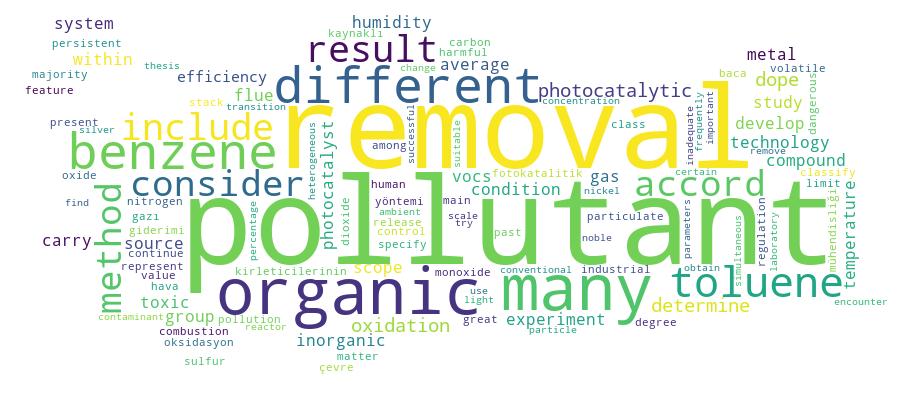
Competency Cloud