Profile URL: https://hdl.handle.net/20.500.13091/11537
Job Title:Prof. Dr.
Email Address:tagacayak@ktun.edu.tr
Main Affiliation:02.12. Department of Mining Engineering
Status: Current Staff
ORCID: 0000-0001-8120-8804
Scopus ID: 23472006500
YÖK Akademik: 1C22FA7C0C19AB38
Google Scholar: WKcIYF4AAAAJ
Web of Science ID: ABG-6977-2022
Name Variants:
Agacayak, Tevfik Agacayak, T.
40 results
Scholarly Output Search Results
Now showing 1 - 10 of 40
Article Artificial Neural Network Analysis of Titanium Dissolution Kinetics in a Sustainable DL-Malic Acid and Sodium Fluoride System: a Fundamental Study Using the Rotating Disc Method(Taylor & Francis Ltd, 2026) Motasim, Mahmoud; Abbaker, Ahmed; Agacayak, Tevfik; Aydogan, Salih; Boyrazli, Mustafa; Abbas, Mohaid; Seifelnassr, Ahmed A. S.This investigation presents a comprehensive kinetic analysis of titanium dissolution utilising DL-malic acid (a 50/50 mix of D- and L- isomer off malic acid) in conjunction with sodium fluoride solution, offering an innovative alternative to conventional chloride and sulphate methodologies. The experimental protocol employed a rotating disc apparatus to elucidate dissolution kinetics under systematically varied parameters, including angular velocity (rad/min), disc surface area (cm(2)), temperature (degrees C), and molar concentrations of DL-malic acid and sodium fluoride. A sophisticated Artificial Neural Network (ANN) architecture, implementing back-propagation methodology through the Levenberg-Marquardt algorithm with a multilayer {6-10-1} configuration, was developed to predict titanium dissolution behavior. Experimental findings demonstrated that sodium fluoride concentration predominantly influenced dissolution kinetics, manifesting a chemical reaction order of 0.674. The investigation substantiated the theoretical framework of the Levich equation within the rotating disc paradigm. The ANN model demonstrated exceptional predictive capability, achieving correlation coefficients (R-2) of 0.995, 0.994, 0.996, and 0.995 for training, validation, testing, and aggregate datasets. The experimentally determined activation energy of 23 kJ/mol conclusively indicated a diffusion-controlled reaction mechanism, providing fundamental insights into the mass transfer phenomena governing the dissolution process. Cette & eacute;tude pr & eacute;sente une analyse cin & eacute;tique compl & egrave;te de la dissolution du titane utilisant l'acide malique-DL (un m & eacute;lange 50/50 d'isom & egrave;res D et L de l'acide malique) en conjonction avec une solution de fluorure de sodium, offrant un choix innovateur par rapport aux m & eacute;thodologies conventionnelles au chlorure et au sulfate. Le protocole exp & eacute;rimental a utilis & eacute; un appareil & agrave; disque rotatif pour & eacute;lucider la cin & eacute;tique de dissolution, avec des param & egrave;tres vari & eacute;s syst & eacute;matiquement, notamment la vitesse angulaire (rad/min), la superficie du disque (cm2), la temp & eacute;rature (degrees C) et les concentrations molaires de l'acide malique-DL et de fluorure de sodium. On a d & eacute;velopp & eacute; une architecture sophistiqu & eacute;e de r & eacute;seau neuronal artificiel (RNA), mettant en oe uvre une m & eacute;thodologie de r & eacute;tropropagation au moyen de l'algorithme de Levenberg-Marquardt avec une configuration multicouche {6-10-1}, afin de pr & eacute;dire le comportement de dissolution du titane. Les r & eacute;sultats exp & eacute;rimentaux ont d & eacute;montr & eacute; que la concentration en fluorure de sodium influen & ccedil;ait principalement la cin & eacute;tique de dissolution, produisant un ordre de r & eacute;action chimique de 0.674. L'& eacute;tude a corrobor & eacute; le cadre th & eacute;orique de l'& eacute;quation de Levich dans le paradigme du disque rotatif. Le mod & egrave;le de RNA a d & eacute;montr & eacute; une capacit & eacute; exceptionnelle de pr & eacute;diction, atteignant des coefficients de corr & eacute;lation (R2) de 0.995, 0.994, 0.996 et 0.995 pour l'apprentissage, la validation, les essais et les ensembles de donn & eacute;es agr & eacute;g & eacute;es. L'& eacute;nergie d'activation de 23 kJ/mol d & eacute;termin & eacute;e exp & eacute;rimentalement a indiqu & eacute; de mani & egrave;re concluante un m & eacute;canisme de r & eacute;action contr & ocirc;l & eacute; par diffusion, fournissant des informations fondamentales sur les ph & eacute;nom & egrave;nes de transfert de masse gouvernant le proc & eacute;d & eacute; de dissolution.Master Thesis Kömürün Hidrofobik Flokülasyon ile Temizlemesinde Atık Yağların Kullanım Olanaklarının Araştırılması(Konya Teknik Üniversitesi, 2020) Ağca, Osman; Ağaçayak, TevfikBu tez çalışması iki aşamadan oluşmaktadır. Birinci kısımda, Beyşehir bölgesinde faaliyet gösteren maden sahasından temin edilen ince boyuttaki (-212 µm) linyit kömürünün zenginleştirilmesi için hidrofobik flokülasyon deneyleri gerçekleştirilmiştir. Deneylerde bitkisel atık yağ, hidrolik atık yağ ve motor atık yağ olmak üzere 3 farklı bağlayıcı sıvı kullanılmıştır. Süspansiyonun pH'ı, katı oran etkisi, sodyum silikat (Na2SiO3 ) miktarı, karıştırma hızı, yağ miktarı, flokülasyon süresi ve flok büyüme süresi gibi parametreler detaylı olarak incelenmiştir. Hidrofobik flokülasyon işleminin başarısı deney sonrasında elde edilen flokların kül içerikleri ve yanabilir kısım verimi (%YKV) ile değerlendirilmiştir. Bitkisel atık yağ kullanılan deneylerde %41.58 kül giderimine ulaşılmış ve %16.38 kül içerikli floklar %99.77 YKV ile kazanılmıştır. Hidrolik atık yağ ve motor atık yağ için kül giderimleri sırasıyla 41.45 ve 43.22 (%) olurken sırasıyla %16.33 ve %17.03 kül içerikli floklar %99.90 ve %99.06 YKV ile kazanılmıştır. İkinci kısımda ise hidrofobik flokülasyon deneylerinde belirlenen parametrelerin etkileri altında kazanılmış flokların iki kez sisteme dâhil edilmesiyle temiz kömür elde edilmesi araştırılmıştır. Bitkisel atık yağ, hidrolik atık yağ ve motor atık yağlar ile hidrofobik flokülasyon deneylerinin birinci ve ikinci aşamasında elde edilen temiz kömürlerin kül içerikleri ve YKV değerleri sırasıyla; bitkisel atık yağ için %15.95, %97.98; %13.48, %99.48, hidrolik atık yağ için %15.37, %96.53, %14.21, %99.67 ve motor atık yağ için %15.81, %98.66, %14.19, %99.98 olarak kazanılmıştır.Article Recyanidation of Gold Heaps Tailing at Hassai Region in Red Sea State, Sudan(2022) Akasha, M.; Ağaçayak, Tevfik; Abdelraheem, Mohamed Taha OsmanArticle Determination of the Optimal Process Parameters for Copper Solvent Extraction Using Robust Design Method(Springer india, 2024-12-14) Abdelraheem, Mohamed Taha Osman; Agacayak, TevfikCopper (Cu) solvent extraction (SX) from sulphate leach solution was investigated using Robust design (Taguchi design). The effect of some parameters, including pH (1.25-5), phase ratio (O/A: 1/3-2/1), concentration of the extractant (2.5-10% v/v) and extraction duration (5-20 min) were examined. In the investigation of SX, the ranges and experimental parameters chosen are as follows: pH, 3.75; concentration of the extractant, 7.5% v/v; Aqueous /Organic ratio, 3/1 and extraction duration, 10 min. Under these conditions, Cu extraction of 94.62% was achieved. Variance analysis technique (ANOVA) suggested that, the most effective parameter was pH and the less effective parameter was the aqueous /organic ratio. Using of 1.5 M H2SO4 allowed for a stripping efficiency of 98% Cu from the organic phase.Article Citation - WoS: 14Citation - Scopus: 14Effect of Organic and Inorganic Compounds on Dissolution Kinetics of Chalcopyrite in Hydrogen Peroxide- Hydrochloric Acid System(Elsevier, 2022-05-01) Agacayak, Tevfik; Abdelraheem, Mohamed Taha OsmanThe addition of 2-Propanol as an organic substance and NaCl as an inorganic com-pound in hydrochloric acid with hydrogen peroxide as a strong leaching agent of chalcopyrite was investigated. The effects of the leaching parameters on copper extraction, such as stirring speed, H2O2 concentration, temperature, HCl concentration and solid/liquid ratio were studied. The max-imum final copper extraction of 54.55% was obtained with 600 rpm stirring speed, 1.5 M H2O2, 0.5 M HCl, 600 rpm, 50 C, 240 min of the reaction and particle size of -106 +75 mm. Further experiments were performed when the solid-to-liquid ratio (S/L), stirring speed, temperature, HCl,H2O2 and leaching time were kept constant to examine the influence of NaCl and 2-Propanol concentrations in the range of 0-0.5 M and 0-3 M, respectively. The results showed that the copper extraction was increased up to 58.11% with addition of NaCl. While copper extraction yield reached 94.25% in case of addition of 2-propanol with the optimum parameters(0.5 M HCl,50 C, 1.5 M H2O2, 600 rpm, particle size -106 +75 lm, solid liquid ratio 2g/L, 3 M 2-propanol). The chalcopyrite leaching in hydrogen peroxide- hydrochloric acid system was found to be described by the interface transfer and diffusion across the product layer with activation energy of 77.14 kJ/mol. Addition of 2-propanol suggested that the reaction was under product layer diffusion control and decreased the activation energy of chalcopyrite leaching to 67.98 kJ/mol. Crown Copyright (c) 2022 Published by Elsevier B.V. on behalf of King Saud University.Article Determination of Optimum Flotation Conditions in Nigde (ulukisla) Complex Pb-Zn Ore(Pamukkale Univ, 2021) Ağaçayak, Tevfik; Yılmaz, Nur BenanIn this study, optimum flotation conditions of Pb-Zn complex ore from Nigde-Ulukisla region were investigated. The liberalization grain size (d(80)) of the ore sample to be used in experimental studies was determined and mineralogical analyzes were performed. Flotation experiments were performed at 30% solid ratio, 10 L/min air flow rate, 1250 rpm stirring speed and pH=9. Reagents and their amounts were determined in grinding, Pb and Zn rough flotation circuits. 8 minutes in the grinding circuit, 4 min in Pb Circuit and 5 min in Zn circuit were applied to in the experiments. As a result, The lead grade of lead concentrate for 55.13%, the recovery for 80.30%, and zinc grade of zinc concentrate for 37.32%, the recovery for 77.60% were obtained.Article Citation - WoS: 2Citation - Scopus: 2Recyanidation of Gold Heaps Tailing at Hassai Region in Red Sea State, Sudan(Pleiades Publishing Inc, 2022-08-01) Osman Abdelraheem, M. Taha; Akasha, M.; Ağaçayak, T.The leaching and agitation tests of gold-bearing tailings from Hassai Mine in Sudan are carried out to find the appropriate particle size that will ensure the maximum recovery. The column tests revealed that it is easy to apply and recover about 65.52% of Au content from the Au-tailing heaps at Ariab mining company by heap leach process. The obtained recovery indicates that the economic commercial viability of the process to be applied for extraction of Au in the huge tailing heaps at Ariab mines.Article Citation - WoS: 1Citation - Scopus: 1Cleaning of Fine-Grained Lignite by Two-Stage Hydrophobic Flocculation Using Different Waste Oils(Taylor and Francis Ltd., 2024-04-14) Abdelraheem, M.T.O.; Agca, O.; Agacayak, T.; Duzyol, S.In this study, the conditions for obtaining clean coal from fine-grained lignite suspensions by two-stage hydrophobic flocculation using different waste oils were investigated. Waste vegetable oil, waste hydraulic oil and waste engine oil were chosen as bridging liquids for hydrophobic flocculation tests. During the studies, sodium silicate was used as the dispersant. Acetone was used at each stage to clean the floc obtained from the agglomeration process. The ash content (%) and combustible recoveries (CR, %) of the floc obtained at the end of each experiment were determined. In addition, contact angle (θ) and calorific values (kcal/kg) were measured and the results were evaluated in detail. At the end of the cleaning stages, low ash clean coal was obtained with a very high combustible recovery. In addition, it was observed that the calorific values increased considerably from 5128 to 5772,5558 to 6304 and 5447 to 5732 using waste vegetable oil, waste hydraulic oil and waste engine oil, respectively. © 2024 Taylor & Francis Group, LLC.Article Citation - WoS: 3Application of the Shrinking-Core Models for Determination of Dissolution Kinetics of Mn and Zn From Spent Zinc-Carbon Battery Powder in Organic Acid Solution(SCIENDO, 2019-06-01) Ağaçayak, Tevfik; Taner, Hasan AliIn this study, dissolution kinetics of manganese and zinc from spent zinc-carbon batteries in acetic acid solution was investigated. To determine the kinetics of dissolution of manganese and zinc, shrinking core model was applied to dissolution recoveries obtained at different temperatures. As a result of kinetic studies, it was determined that manganese and zinc were dissolved in acetic acid solution by diffusion from product layer and then activation energies (Ea) were calculated.Article Effect of Iron Chloride Salts on the Leaching Kinetics of Cobalt, Manganese, and Nickel from Spent Lithium-Ion Batteries in Acidic Chloride Media: A Comparative Study(Taylor & Francis Ltd, 2026) Motasim, Mahmoud; Agacayak, Tevfik; Eker, Yasin RamazanSpent lithium-ion batteries serve as a valuable secondary source of critical metals such as cobalt (Co), nickel (Ni), and manganese (Mn). This research explores how ferric chloride (FeCl3) and ferrous chloride tetrahydrate (FeCl2 & centerdot;4H(2)O) affect the leaching of these metals in hydrochloric acid solutions under oxidative and reductive conditions. The study systematically examined the effects of FeCl3 (0.05-0.30 M), FeCl2 & centerdot;4H(2)O (0.05-0.30 M), HCl concentration, temperature (30-60 degrees C), solid-to-liquid ratio (2-6 g L-1), and agitation speed (50-300 rev min-1). Calcining at 700 degrees C removed about 10% of carbon from the cathode, leading to notable changes in XRD and SEM/EDX analyses compared to non-calcined material. Oxidative leaching with Fe & sup3;+ achieved over 95% recovery for Co, Ni, and Mn, while reductive leaching with Fe & sup2;+ favoured Mn dissolution, showing higher selectivity. Metal dissolution increased with higher temperature, reagent concentration, and agitation speed but decreased at higher solid-to-liquid ratios. Reproducibility was confirmed through replicate experiments. Kinetic analysis indicated a mixed-controlled shrinking-core model best described both leaching processes. Activation energies for oxidative leaching were 62.57, 40.05, and 58.08 kJ mol-1 for Co, Ni, and Mn, respectively, compared to 78.63, 55.76, and 87.00 kJ mol-1 under reductive conditions. Les batteries lithium-ion usag & eacute;es constituent une source secondaire pr & eacute;cieuse de m & eacute;taux critiques tels que le cobalt (Co), le nickel (Ni) et le mangan & egrave;se (Mn). Cette recherche explore l'influence du chlorure ferrique (FeCl3) et du chlorure ferreux t & eacute;trahydrat & eacute; (FeCl2 & centerdot;4H2O) sur la lixiviation de ces m & eacute;taux dans des solutions d'acide chlorhydrique, en conditions oxydantes et r & eacute;ductrices. L'& eacute;tude a examin & eacute; de mani & egrave;re syst & eacute;matique les effets de FeCl3 (0.05 & agrave; 0.30 M), de FeCl2 & centerdot;4H(2)O (0.05 & agrave; 0.30 M), de la concentration en HCl, de la temp & eacute;rature (30 & agrave; 60 degrees C), du rapport solide/liquide (2 & agrave; 6 g/L) et de la vitesse d'agitation (50 & agrave; 300 tr/min). La calcination & agrave; 700 degrees C a & eacute;limin & eacute; environ 10% du carbone de la cathode, conduisant & agrave; des modifications notables des analyses de DRX et de MEB/EDS par rapport au mat & eacute;riau non calcin & eacute;. La lixiviation oxydative avec Fe3+ a permis d'obtenir une r & eacute;cup & eacute;ration sup & eacute;rieure & agrave; 95% pour le Co, le Ni et le Mn, tandis que la lixiviation r & eacute;ductrice avec Fe2+ favorisait la dissolution du Mn, d & eacute;montrant une s & eacute;lectivit & eacute; sup & eacute;rieure. La dissolution des m & eacute;taux augmentait avec la temp & eacute;rature, la concentration du r & eacute;actif et la vitesse d'agitation, mais diminuait aux rapports solide/liquide plus & eacute;lev & eacute;s. On a confirm & eacute; la reproductibilit & eacute; par des exp & eacute;riences r & eacute;p & eacute;t & eacute;es. L'analyse cin & eacute;tique a indiqu & eacute; qu'un mod & egrave;le & agrave; noyau r & eacute;tr & eacute;cissant & agrave; contr & ocirc;le mixte d & eacute;crivait le mieux les deux proc & eacute;d & eacute;s de lixiviation. Les & eacute;nergies d'activation pour la lixiviation oxydative & eacute;taient de 62.57, 40.05 et 58.08 kJ/mol pour le Co, le Ni et le Mn, respectivement, contre 78.63, 55.76 et 87.00 kJ/mol en conditions r & eacute;ductrices.
Research Topics
Domains
Physical Sciences
Fields
EngineeringEnvironmental Science
Subfields
Biomedical EngineeringMechanical EngineeringWater Science and TechnologyIndustrial and Manufacturing EngineeringWaste Management and Disposal
Specific Research Areas
Metal Extraction and Bioleaching
Extraction and Separation Processes
Minerals Flotation and Separation Techniques
Mineral Processing and Grinding
Recycling and Waste Management Techniques
Sustainable Development Goals
 11
SUSTAINABLE CITIES AND COMMUNITIES
1
Research Products
 12
RESPONSIBLE CONSUMPTION AND PRODUCTION
1
Research Products
 6
CLEAN WATER AND SANITATION
1
Research Products

Documents
32
Citations
168
h-index
6

Documents
36
Citations
169
Publication Collaboration
| Affiliation Name | Count |
|---|---|
| Konya Technical University | 31 |
| Omdurman Islamic University | 16 |
| Selçuk University | 7 |
| Necmettin Erbakan University | 4 |
| Fırat University | 2 |
1 / 4
Data obtained from OpenAlex
| Journal | Count |
|---|---|
| International Journal of Coal Preparation and Utilization | 3 |
| Acta Chemica Iasi | 2 |
| Hydrometallurgy | 2 |
| Acta Montanistica Slovaca | 2 |
| Canadian Metallurgical Quarterly | 2 |
Current Page: 1 / 5

Scholarly Output
40
Articles
32
Views / Downloads
118/333
Supervised MSc Theses
5
Supervised PhD Theses
1
WoS Citation Count
71
Scopus Citation Count
67
Patents
0
Projects
0
WoS Citations per Publication
1.78
Scopus Citations per Publication
1.68
Open Access Source
21
Supervised Theses
6
Scopus Quartile Distribution
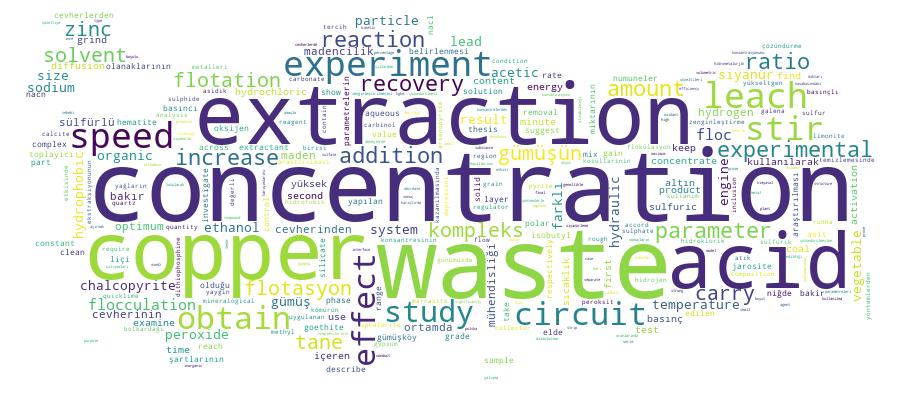
Competency Cloud