Profile URL: https://hdl.handle.net/20.500.13091/11921
Job Title:Doç. Dr.
Email Address:tugbahanyilmaz@ktun.edu.tr
Main Affiliation:07. 10. Department of Electricity and Energy
Status: Current Staff
ORCID: 0000-0001-8633-5845
Scopus ID: 57219531149
YÖK Akademik: 0E8AB32AE4B98C30
Google Scholar: epXPdEoAAAAJ
Web of Science ID: GKK-3281-2022
Name Variants:
Yılmaz, T. Yilmaz, Tugbahan
22 results
Scholarly Output Search Results
Now showing 1 - 10 of 22
Article Citation - WoS: 15Citation - Scopus: 14Synthesis of Boron-Doped Cqds and Its Use as an Additive in P3ht:pcbm Layer for Efficiency Improvement of Organic Solar Cell(ELSEVIER, 2021-01-01) Kırbıyık Kurukavak, Çisem; Yılmaz, Tuğbahan; Çetin, Şevval; Alqadasi, Mamdoh Murad; Al-Khawlany, Khawlan Mohammed; Kuş, Mahmut; Kurukavak, Cisem KirbiyikThis study reports the synthesis of boron-doped CQDs (B-CQDs) and the using as a novel additive for organic solar cells. we introduced B-CQDs P3HT:PCBM bulk heterojunction organic solar cells (OSCs). The structural and morphological characterization results showed that the optical absorption and film crystallinity can be easily enhanced by B-CQDs additive in P3HT:PCBM solution. Additionally, with the improved crystallinity of P3HT, the effective interchain interaction and phase separation in photoactive layer were achieved. As a result,-50% improving of FF of the device with 5 vol% of B-CQDs additive was determined. Thanks to improved photovoltaic characteristics, best performing device showed a power conversion efficiency of 2.7% (with-50% improve-ment). This report shows that the addition of optimized vol% of B-CQDs into the photoactive blend strongly improves the absorption and leads to achieve efficient charge separation and transport in OSCs.Article Citation - WoS: 15Citation - Scopus: 17Improved Performance With Boron-Doped Carbon Quantum Dots in Perovskite Solar Cells(Elsevier Ltd, 2022-12-01) Kırbıyık Kurukavak, Çisem; Yılmaz, Tuğbahan; Toprak, Ayşegül; Büyükbekar, Alihan; Kuş, Mahmut; Ersöz, Mustafa; Ersoz, Mustafa; Kurukavak, Cisem Kirbiyik; Buyukbekar, AlihanThis study reports the using of boron-doped carbon quantum dots (B-CQDs), which can convert ultraviolet to blue light, as an additive in MAPbI3 based perovskite solar cells (PSCs) for improved photovoltaic performance. After a successful facile synthesis of B-CQDs, our work showed that the appropriate addition of B-CQDs (5% vol.) into MAPbI3 absorber layer can passivate the grain boundaries of perovskite crystals, improve the crystallinity and the grain sizes. Additionally, optical, and photovoltaic characteristics showed that the addition of B-CQDs can efficiently improve the charge transport properties and the hole extraction, while decreasing the recombination losses. In comparison to control device, power conversion efficiency (PCE) of champion device was increased from 10.4% to 12.7%. This approach of constructing inverted p-i-n PSCs with B-CQDs additives offers a simple way for the preparation of efficient and stable perovskite photovoltaics for future application. © 2022 Elsevier B.V.Other Phosphorus Doped Carbon Dots Additive Improves the Performance of Perovskite Solar Cells Via Defect Passivation in Mapbi3 Films(2022) Kurukavak, Çisem Kırbıyık; Yılmaz, Tuğbahan; Büyükbekar, AlihanArticle Citation - Scopus: 3Rapid Evaluation of Lateral-Torsional Buckling of European Standard I-Section Cantilevers(Taylor and Francis Ltd., 2023-06-15) Yılmaz, T.Lateral-torsional buckling (LTB) is the primary failure mode for thin-walled steel members where the cantilever beams experience nonuniform twisting and buckling about their weak axes. Much research exists in the literature, and modern codes have presented simple formulations for calculating of elastic LTB load of simply-supported beams. However, there are limited numbers of treatments for predicting of elastic LTB load of cantilevers, most of which are numerical, because as different from the simply supported beams, the LTB failure mode of the thin-walled cantilevers is much more complicated. The present study aims to develop a simplified equation for calculating the elastic LTB of the cantilevers with the European standard I-section. First, an analytical model considering first-order bending distribution, load height level, and monosymmetry property of the section has been introduced. Then, a simplified formula for cantilevers has been introduced utilizing the analytical model and two dimensionless coefficients called the slenderness and the load case parameters. The presented analytical solutions were verified with the finite element analysis (FEA), and the effects of slenderness and loading positions on the LTB behavior of cantilevers with European standard I-section have been investigated. It is found analytical solutions are quite compatible with FEA, and the proposed equation could be safely used for calculating the elastic LTB of the cantilevers. © 2023 Taylor & Francis Group, LLC.Other Improved Performance with Boron-Doped Carbon Quantum Dots in Perovskite Solar Cells(2022) Kurukavak, Çisem Kırbıyık; Yılmaz, Tuğbahan; Büyükbekar, Alihan; Ersöz, Mustafa; Toprak, Ayşegül; Kuş, MahmutConference Object Citation - Scopus: 1A Mathematica Code for Evaluating Lateral-Torsional Buckling of Tapered Cantilevers(EDP Sciences, 2024) Yilmaz, T.Lateral-torsional buckling (LTB) is the primary failure mode where slender cantilevers experience nonuniform twisting and buckling about their weak axes. The studies focused on the elastic LTB load of cantilevers are limited, most of which are numerical since the LTB failure mode of cantilevers is much more complicated than those of simply supported beams. Furthermore, there are only a few studies of the LTB of tapered I-section cantilevers, which are aesthetic and structurally efficient. Structural designers tend to evaluate the LTB of tapered cantilevers using finite element simulations, but it requires specific experience and computational effort. The present study intends to close the gap in the literature related to tapered cantilevers, establish an analytical procedure providing rapid treatment, and develop a code for the solution. The analytical model considers first-order moment gradient through the cantilever, load position along the cross-section, mono-symmetry property of I-section, tapering of web, flange, or simultaneously web and flange to assess LTB of tapered cantilevers. The developed Mathematica code based on the analytical model has been verified with 3D finite element analysis, and it is demonstrated that the proposed code can be safely used to assess the LTB of tapered cantilevers. © The Authors, published by EDP Sciences, 2024.Book Part Marine Biopolymers in Robust Biosolar Cells(Elsevier, 2025) Yilmaz T.; Yilmaz, TugbahanMarine with nearly 250,000 species has a high level of biodiversity and a plenty source of biopolymers. Therefore, marine has gained attention in many fields in recent decades for attractive properties of marine biopolymers including biodegradable, biocompatibility, and biosynthesize. On the other hand, increasing world population, global industrialization, and environmental concern as well as global energy consumption need further discussion. These problematic topics are forced search to new energy source. Marine biopolymers are well studied in many research areas. Nonetheless, there is limited scientific study using with marine biopolymers in solar energy application. Hence, this chapter presents studies on biosolar cell applications of emerging marine biopolymers. In this sense, due to the limited number of studies, cyanobacteria, algae, and chlorophyll in the marine ecosystem are emphasized. © 2025 Elsevier Ltd. All rights reserved.Book Part Citation - Scopus: 2Advanced Applications of Green Materials in Bioelectronics Applications(Elsevier, 2021) Yılmaz, Tuğbahan; Kuş, MahmutGreen materials have great potential to become a primary research area for bioelectronic integration. Over the last three decades, bioelectronic applications have been getting great interest due to their low cost, flexible, nontoxic, large-volume electronic components that are sustainable, biocompatible, biodegradable, and bioresorbable. Therefore the versatility of bioelectronics applications, such as organic field-effect transistors and biosensors, promises a bright future. This chapter will highlight recent progress in the natural materials and some of their applications in bioelectronics devices. The key strategies and the forecast perspectives of this research field are also briefly summarized. © 2021 Elsevier Ltd. All rights reserved.Article Spray Coating Versus Spin Coating of Titanium Dioxide as Electron Transfer Layer for Organic Solar Cells(Springer, 2025-07-05) Yilmaz, Tugbahan; Buyukbekar, Alihan; Kurukavak, Cisem Kirbiyik; Kus, Mahmut; Kırbıyık Kurukavak, ÇisemIn this study, spray coating and spin coating methods for the titanium oxide (TiO2) layer used as the electron transfer layer (ETL) were compared to examine the performance parameters of organic solar cells. Despite the fact that there is no major change in the VOC value, with VOC measured at 0.589 V for the spray-coated device and 0.548 V for the spin-coated device, the device performance parameters of the device fabricated with TiO2 layer sharply increased, with the current density-voltage (J-VSC), fill factor (FF), and power conversion efficiency (PCE) values obtained by the spray coating method. We demonstrate that spray-coated c-TiO2 layers achieve a higher PCE of 2.92% compared to 2.32% for spin-coated devices. The PCE of the solar cell using TiO2 formed by spray coating is 25% higher than the device obtained by spin coating.Article Citation - Scopus: 8Optimal Site Selection for Green Hydrogen Production Plants Based on Solar Energy in Konya/Türkiye(Pergamon-elsevier Science Ltd, 2025-04-01) Yilmaz, Tugbahan; Uyan, MevlutThe combination of solar energy and hydrogen technologies has a critical role in accelerating the energy transition and reducing carbon emissions. This study identifies optimal sites for green hydrogen production in Konya, a region with high solar energy potential in T & uuml;rkiye. Within the scope of the research, a multi-criteria approach covering technical, economic and environmental sensitivities has been adopted. These criteria were prioritised according to the expert opinions by using Best-Worst Method (BWM), a Multi criteria Decision-Making (MCDM) method. By using Geographic Information System (GIS) spatial analysis tools, the prioritised criteria were combined according to their weights and suitable and unsuitable areas were revealed. The results showed that 7.10% (275858 ha) of the study area is very suitable for constructing green hydrogen production plant based on solar energy, especially in Konya city centre, Karapinar, Eregli, Beys,ehir and Seydis,ehir districts. Konya province's large solar energy potential, existing energy infrastructure and proximity to industrial zones make this region a strategic centre for green hydrogen production. This study provides important findings to strengthen T & uuml;rkiye's strategic position in renewable energy-based hydrogen production and contribute to regional sustainable development.
- «
- 1 (current)
- 2
- 3
- »
Research Topics
Domains
Physical Sciences
Fields
Materials ScienceEngineering
Subfields
Polymers and PlasticsElectrical and Electronic EngineeringMaterials Chemistry
Specific Research Areas
Conducting polymers and applications
Organic Electronics and Photovoltaics
Perovskite Materials and Applications
Quantum Dots Synthesis And Properties
Molecular Junctions and Nanostructures
Sustainable Development Goals
 7
AFFORDABLE AND CLEAN ENERGY
11
Research Products
 11
SUSTAINABLE CITIES AND COMMUNITIES
3
Research Products
 14
LIFE BELOW WATER
1
Research Products
 8
DECENT WORK AND ECONOMIC GROWTH
1
Research Products
 9
INDUSTRY, INNOVATION AND INFRASTRUCTURE
1
Research Products

Documents
18
Citations
144
h-index
8

Documents
14
Citations
206
Publication Collaboration
| Affiliation Name | Count |
|---|---|
| Konya Technical University | 18 |
| Selçuk University | 17 |
| Centre National de la Recherche Scientifique | 3 |
| Laboratoire de l'Intégration du Matériau au Système | 3 |
| Institut Polytechnique de Bordeaux | 3 |
1 / 9
Data obtained from OpenAlex
| Journal | Count |
|---|---|
| SSRN Electronic Journal | 2 |
| Applications of Advanced Green Materials | 1 |
| Bartın University International Journal of Natural and Applied Sciences | 1 |
| Bionanocomposites in Tissue Engineering and Regenerative Medicine | 1 |
| Challenge Journal of Structural Mechanics | 1 |
Current Page: 1 / 5

Scholarly Output
22
Articles
15
Views / Downloads
56/10
Supervised MSc Theses
0
Supervised PhD Theses
0
WoS Citation Count
94
Scopus Citation Count
125
Patents
0
Projects
0
WoS Citations per Publication
4.27
Scopus Citations per Publication
5.68
Open Access Source
7
Supervised Theses
0
Scopus Quartile Distribution
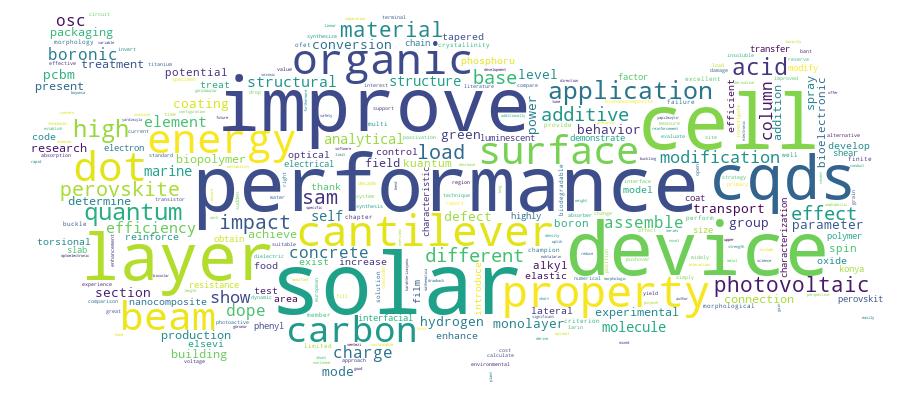
Competency Cloud