Profile URL: https://hdl.handle.net/20.500.13091/11690
Job Title:Doç. Dr.
Email Address:bhaspulat@ktun.edu.tr
Main Affiliation:02.01. Department of Chemical Engineering
Status: Current Staff
ORCID: 0000-0002-5170-322X
Scopus ID: 55781912200
YÖK Akademik: D0851B6A32432E21
Google Scholar: ZFgEGJ4AAAAJ
Web of Science ID: AAG-5188-2019
Name Variants:
Haspulat Taymaz, B.
25 results
Scholarly Output Search Results
Now showing 1 - 10 of 25
Article Citation - WoS: 8Citation - Scopus: 9Improved Visible Light-Driven Photocatalytic Degradation of Methylene Blue and Methyl Red by Boron-Doped Carbon Quantum Dots(TUBITAK, 2022-01-01) Haspulat Taymaz, Bircan; Kırbıyık Kurukavak, Çisem; Kamış, Handan; Kuş, Mahmut; Taymaz, Bircan Haspulat; Kurukavak, Çisem KırbıyıkThe synthesis of fluorescent carbon quantum dots (CQDs) and their applications have attracted great attention due to their excellent properties. Especially, the unique visible-light absorption and photo-induced electron transfer properties make CQDs available in photocatalytic degradation of organic dye pollutants in water resources. Herein, we synthesized nondoped CQDs and boron-doped CQDs (B-CQDs) by hydrothermal method and compared their photocatalytic degradation activity of methylene blue (MB) and methyl red (MR) dyes under visible light irradiation. The characterization outcomes showed that the optical and structural properties can be easily improved by doping with hetero-atom, thereby photocatalytic performance. As expected, the photodegradation performance of both organic dyes in model solutions by B-CQDs was higher than that of CQDs. MB and MR dyes were photodegraded over 95% by B-CQDs in 90 and 120 min visible light irradiation, respectively. Eventually, the results revealed that nondoped CQDs and B-CQDs are excellent candidates for the degradation of organic dyes because of their high photocatalytic performance under visible light illumination. © 2022 TUBITAK. All rights reserved.Article Citation - WoS: 1Citation - Scopus: 1Optimized Size Sorting of Mxene Particles Via Centrifugal Sedimentation: a Practical Approach Using an Empirical Model and Image Processing Technique(Taylor & Francis inc, 2025) Onat, Buket; Taymaz, Bircan Haspulat; Eskizeybek, Volkan; Kamis, Handan; Haspulat Taymaz, BircanControlling the physical, mechanical, and electrochemical properties of MXene-based materials is crucial for their effectiveness in macroscale applications and is closely tied to the particle size distribution of MXene. This study aimed to accomplish dimensional control and sorting of MXene colloids with different particle sizes using centrifugal sedimentation based on an empirical model. Centrifuge time and rotating speed were identified as key parameters and optimized using a mathematical formula generated from the model, considering particle forces in the solution. A novel image processing technique aimed at ease of use was devised to evaluate the separation process, assuring the audience of its usability. The separation efficiencies were measured individually at rotating speeds ranging from 2900 to 6000 rpm. The optimal experimental settings differed between the supernatant and sediment fractions. The maximum separation efficiency was reached at 86% for the supernatant at 3500 rpm for 49 min and 43% for the sediment at 4200 rpm for 34 min, suggesting that supernatant-based separation is more efficient than sediment-based techniques. This study offers a valuable guideline for separating the sizes of 2D materials. Image processing offers scalable particle size measurement, which improves material property control for a variety of applications.Article Electrochemical Production of Zno and Zno@ag Core-Shell Nanorods on Ito Substrate and Their Photocatalytic and Photoelectrochemical Performance(2019) Kamış, Handan; Karakuş Duyar, Nadiye; Haspulat Taymaz, Bircan; Duyar-karakuş, Nadiye; Haspulat-taymaz, BircanZinc oxide (ZnO) and Ag deposited ZnO (ZnO@Ag) core-shell nanorods produced electrochemically on indium tin oxide coated glass (ITO) substrate for the first time without any organic surfactants or high annealing temperature. Nanorod films were synthesized two-step synthesis procedure. Firstly, ZnO nanorods electrodeposited at low temperature, in second step, in situ electrochemically etching of deposited ZnO nanorod was carried out. Characterizations of electrochemically produced films have been carried by using morphologic, spectroscopic and structural analysis methods by using X-ray diffraction (XRD), scanning electron microscope (SEM), atomic force microscope (AFM), fourier transform infrared spectroscopy (FTIR), Elemental mapping, UV-visible diffuse absorption spectra and photoluminesance spectroscopy (PL). The photocatalytic performance of the obtained films was determined by degradation of methylene blue and malachite green dyes under UV light illumination. Methylene blue and malachite green dyes completely degraded under UV light irradiation after 150 and 180 min, respectively. Also, photoelectrochemical (PEC; water splitting) performances of the produced films were investigated under dark conditions and UV light irradiation. The ZnO@Ag core-shell nanorods exhibited higher photocatalytic and photoelectrochemical performance in comparison with unmodified ZnO nanorods film. The nanorods grown on the ITO substrates showed very good photocatalytic activity and became reusable without significant loss of activity.Conference Object The Photocatalytic Performance of Fe and Co Doped Zno Nanoparticles(ICONSAD, 2022) Haspulat Taymaz, BircanOrganic contaminants, toxic substances, synthetic compounds, and various complex substances have been found in the ground, sewage, and drinkable water supplies over the previous few decades because of population growth and fast industrialization. The textile industry is one of the biggest global emitters of contaminated wastewater, which contains huge amounts of nonbiodegradable dyes and other reagents. The organic dyes in textile industries' wastewater harm mammals and the aquatic environment when discharged into the water without treatment. The pollutants in textile wastewater are transferred from one phase to another with conventional treatment procedures. The photocatalytic degradation process almost converted organic contaminants into less harmful or non-toxic components, which operate at low cost at room temperature and atmospheric pressure Ternary nanocomposite has improved the visible light absorption capacity and transfer of photogenerated charges on the surface. Here, the visible light-induced ternary Fe and Co-doped ZnO (ZFC) synthesized via hydrothermal method. The characterization of ZFC has been completed via X-Ray diffraction (XRD), scanning electron microscope (SEM), energy dispersive spectroscopy (EDX) and elemental mapping methods. The photocatalytic efficiency of ZFC was investigated with the degradation of rhodamine B (RdB) under visible light irradiation. Then the influence of dye concentration and photocatalyst amount on the photocatalytic degradation of RdB dye in the presence of ZFC photocatalyst. Also, the recycling performance of the ZFC nanocomposite examine.Article GÖRÜNÜR IŞIK İLE UYARILABİLEN Ppy/ZnO@Fe KOMPOZİTİNİN FOTOKATALİTİK AKTİVİTESİNİN OPTİMİZASYONU(2021-12-30) Haspulat Taymaz, Bircan; Taymaz, Bircan HaspulatGünümüzde endüstrileşmenin artması beraberinde pek çok çevre problemini getirmiştir. Tekstil endüstrisi başta olmak üzere, kağıt, deri ve kozmetik sektörlerinde kullanılan sentetik organik boyar maddelerin alıcı ortam olan sulara deşarjı çevreyi ciddi anlamda tehdit etmektedir. Bu nedenle, bu sektörlerden gelen ve sentetik boyar madde içeren atık suların çevreye salınmadan önce muhakkak arıtılması gerekmektedir. Günümüzde boyar maddelerin alıcı ortamdan uzaklaştırılması için fotokatalitik atık su arıtımı en çok tercih edilen yöntemlerden biridir. Bu çalışmada polimerizasyon ortamında ZnO@Fe nanopartikülleri ultrasonikasyon ile dağıtılarak pirol ve amonyum peroksidisülfat varlığında kimyasal oksidatif polimerizasyon yöntemi ile polipirol/ZnO@Fe (Ppy/ZnO@Fe) nanokompozitleri elde edilmiştir. Ppy/ZnO@Fe kompozitinin yapısal, morfolojik ve spektroskopik özellikleri SEM, XRD, FTIR, DSC ve UV-vis absorpsiyon yöntemleri ile aydınlatılmıştır. Ppy/ZnO@Fe kompozitinin fotokatalitik aktivitesi görünür ışık altında rodamin B (RdB) boyasının fotokatalitik olarak giderilmesi ile incelenmiştir. Fotokatalitik aktiviteye fotokatalizör miktarının, boya derişiminin, ışıma zamanın ve boya pH’ının etkisi deney tasarımı yöntemlerinden biri olan Taguchi yöntemi ile optimize edilmiştir. 60 dk sonunda RdB boyasının Ppy/ZnO@Fe katalizörlüğünde görünür ışık altında %99 oranında rengi giderilmiştir.Article Citation - WoS: 17Citation - Scopus: 24Photocatalytic Degradation of Organic Dyes With Magnetically Separable Pani/Fe3o4 Composite Under Both Uv and Visible-Light Irradiation(John Wiley and Sons Inc, 2022-02-08) Demir, M.; Haspulat Taymaz, Bircan; Sarıbel, M.; Kamış, Handan; Taymaz, Bircan HaspulatThe creation of a novel composite photocatalyst has gained great attention in the field of organic dye remediation. Herein, the PANI/Fe3O4 photocatalyst has been prepared using the chemical oxidative polymerization of aniline. The as-prepared photocatalyst represents a denser and uniform morphology along with strong magnetic properties. The photocatalytic activity of the PANI/Fe3O4 was investigated for the degradation of Malachite Green (MG), Jakazol Kala (JK) and Levafix Red (LR). In the presence of PANI/Fe3O4 composite, the reaction rate constants were found to be 0.1997, 0.0521, and 0.1993 min?1 for MG, JK and LR, under UV-light irradiation and 0.0522, 0.0491, 0.0544 min?1 under visible light irradiation, respectively. The nanocomposite can be easily separated from the treated water and reused several times. The suppression of electron recombination, the reduced bandgap and the broad light-harvesting in both UV and visible-light regions contribute to the advanced photocatalytic performance of the PANI/Fe3O4. © 2022 Wiley-VCH GmbHArticle Citation - WoS: 36Citation - Scopus: 39Photocatalytic Activity of Polyaniline and Neutral Polyaniline for Degradation of Methylene Blue and Malachite Green Dyes Under Uv Light(SPRINGER, 2021-04-06) Haspulat Taymaz, Bircan; Taş, Recep; Kamış, Handan; Can, MuzafferA polyaniline (PANI) and neutral Polyaniline (NPANI) have been synthesized in acetonitrile-water mixture via the chemical oxidative polymerization of aniline. Scanning electron microscopy, FTIR spectra, UV-vis spectroscopy measurements were used to characterize the resulting PANI and NPANI. The photocatalytic activities of PANI and NPANI were investigated by the degradation of methylene blue (MB) and malachite green (MG) dyes in aqueous medium under UV light irradiation. MB and MG dyes completely degraded under UV light irradiation in the presence of NPANI after 60 and 75 min, respectively. The effect of dye type, irradiation time, dye concentration and photocatalyst amount on photocatalytic performance of PANI and NPANI have been examined under UV light irradiation. Three kinetic models have proposed for photocatalytic degradation of dyes by using PANI and NPANI under UV light illumination. This work explores the easy way to synthesize efficient PANI and NPANI polymers to degrade organic compound under both UV and visible light irradiations.Conference Object Tekstil Endüstrisi Atık Sularının Fotokatalitik Olarak Giderimi için Popd/ag Film Fotokatalizörünün Sentezi(UNIKOP, 2022) Haspulat Taymaz, BircanEndüstriyel kaynaklı atık sular artılmadan alıcı ortama deşarj edildiğinde hava, su ve toprağın kirlenmesine neden olmaktadır. Bu nedenle atık suların alıcı ortama salınmadan önce mutlaka arıtılması gerekmektedir. Tekstil endüstrisi, alıcı ortama fazla miktarda toksik, renkli ve konserojenik maddeler içeren atık su salan bir endüstri koludur. Tekstil endüstrisi atık sularının renginin giderilmesinde fotokatalitik bozunma prosesleri son zamanlarda en çok tercih edilen yöntemlerden biridir. Fotokataliz bir yarıiletkenin bant boşluğuna uygun bir ışık kaynağı ile uyarılması ile oluşan reaktif türler yardımıyla zararlı organik yapılarının zararsız su, karbon dioksit ve mineral tuzlara dönüştürülmesidir. Film fotokatalizörler fotokatalitik bozunma tamamlandıktan sonra kolaylıkla alıcı ortamdan ayrılabildiği için tekrar kullanım kolaylığı sağlamaktır. Bu amaçla bu çalışmada görünür ışık ile uyarılabilen, fotokatalitik performansı yüksek, tekrar kullanılabilen film fotokatalizörlerinin geliştirilmesi amaçlanmıştır. Tekstil endüstrisi atık sularının fotokatalitik olarak giderilmesi için elektrokimyasal yöntemle Ag katkılanmış poli(orto-fenilendiamin) (POPD/Ag) kalem ucu elektrot üzerine sentezlenmiştir. Bu amaçla belirli miktarda AgNO3 ve orto-fenilendiamin monerini içeren sulu çözelti hazırlanmıştır. Polimerizasyon çalışma elektrodu olarak kalem ucu gratif, karşıt elektrot olarak Pt tel ve referans elektrot olarak Ag tel kullanılan üç elektrotlu elektrokimyasal hücrede gerçekleştirilmiştir. POPD/Ag filminin morfolojik, spektroskopik ve optik karakterizasyonu için sırasıyla taramalı elektron mikroskopu, Fourier dönüşümlü infrared spektroskopisi ve UV görünür bölge absorpsiyon spektroskopisi kullanılmıştır. Karakterizasyonu tamamlanan POPD/Ag filminin fotokatalitik performansı model boya olarak seçilen malahit yeşilinin (MY) görünür ışık altında renginin giderilmesi amacıyla incelenmiştir. MY boyası görünür ışık altında 50 dk sonunda rengi tamamen giderilmiştir. MY boyasının renginin fotokatalitik olarak giderilmesine Ag katkılama oranının, boya derişiminin etkisi incelenmiştir. Ag katkılamanın fotokatalitik aktiviteye etkisinin kıyaslanması amacıyla tüm fotokatalitik performans çalışmaları saf POPD filmi ile aynı koşullar altında tekrarlanmıştır. Fotokatalik reaksiyon hız sabitleri, reaksiyonun birinci dereceden olduğu kabul edilerek hesaplanmıştır. Ayrıca üretilen POPD/Ag film fotokatalizörünün MY boyasının giderilmesindeki fotokatalitik kararlılığının incelenmesi amacıyla tekrar kullanım çalışmaları tamamlanmıştır. Beşinci kullanımda dahi POPD/Ag film fotokatalizörü performansını korumuştur. Bütün sonuçlar değerlendirildiğinde görünür ışık altında aktifleşebilen, organik boyaların fotokatalitik olarak giderilmesinde yüksek performansa sahip tekrar kullanılabilen film fotokatalizör başarılı bir şekilde üretilmiştir.Other Adsorption-Assisted Photocatalytic Degradation of Anionic Direct Yellow-50 and Cationic Methylene Blue Dyes by Chemically Synthesized Poly(1,5-Diaminoanthraquinone)(2024) Kamış, Handan; Eskizeybek, Volkan; Özler, Ayşenur; Taymaz, Bircan Haspulat; Hancı, Ahmet; Akıllı, AleynaArticle Citation - WoS: 3Citation - Scopus: 4Facile Fabrication of Zno Nanoparticles for Efficient Dye Degradation: Effect of Adipic Acid in Photocatalytic Activity(Wiley-V C H Verlag Gmbh, 2023-02-20) Demir, Müslüm; Özbay, Emre; Kamış, Handan; Haspulat Taymaz, Bircan; Taymaz, Bircan HaspulatPhotocatalysis is the most environmentally benign and efficient method for degrading organic dyes in water purification. Herein, the synthesis of ZnO nanoparticles was achieved by simple homogeneous chemical precipitation via the support of adipic acid and followed the calcination process at elevated temperatures. Based on the physical and morphological characterization analysis, the high crystallinity hexagonal structure with uniform granular shape morphology of the ZnO nanoparticles was formed with a band gap of 3.2 eV. The photocatalytic performance of the ZnO nanoparticles was investigated with the degradation of methylene blue (M.B.) dye as a model compound in an aqueous medium under UV light irradiation. The optimal ZnO-700 nanoparticles demonstrated the highest photocatalytic activity thanks to their large surface area and numerous oxygen vacancies. More importantly, a small amount of photocatalyst (0.4 g/L) successfully degraded M.B. dye from an aqueous solution with 100 % efficiency within just 11 minutes of irradiation time under UV light with protective photocatalytic activity 4 sequential cycles. Besides, in-depth photocatalysis experiments present that via a facile two-step synthesis method, the as-prepared ZnO photocatalysts depict enhanced chemical stability in a harsh environment and efficient photodegradation.
- «
- 1 (current)
- 2
- 3
- »
Research Topics
Domains
Physical Sciences
Fields
EnergyMaterials ScienceEngineering
Subfields
Renewable Energy, Sustainability and the EnvironmentPolymers and PlasticsMaterials ChemistryElectrical and Electronic Engineering
Specific Research Areas
Advanced Photocatalysis Techniques
Conducting polymers and applications
TiO2 Photocatalysis and Solar Cells
ZnO doping and properties
Electrochemical sensors and biosensors
MXene and MAX Phase Materials
Sustainable Development Goals
 6
CLEAN WATER AND SANITATION
10
Research Products
 9
INDUSTRY, INNOVATION AND INFRASTRUCTURE
6
Research Products
 14
LIFE BELOW WATER
2
Research Products
 7
AFFORDABLE AND CLEAN ENERGY
2
Research Products
 11
SUSTAINABLE CITIES AND COMMUNITIES
1
Research Products

Documents
23
Citations
554
h-index
11

Documents
23
Citations
500
Publication Collaboration
| Affiliation Name | Count |
|---|---|
| Konya Technical University | 21 |
| Çanakkale Onsekiz Mart Üniversitesi | 14 |
| Selçuk University | 7 |
| Osmaniye Korkut Ata University | 3 |
| University Frères Mentouri Constantine 1 | 1 |
1 / 4
Data obtained from OpenAlex
| Journal | Count |
|---|---|
| Journal of Inorganic and Organometallic Polymers and Materials | 2 |
| International Journal of Phytoremediation | 2 |
| Turkish Journal of Chemistry | 2 |
| Research Square | 2 |
| Environmental Engineering Research | 1 |
Current Page: 1 / 4

Scholarly Output
25
Articles
20
Views / Downloads
65/73
Supervised MSc Theses
0
Supervised PhD Theses
0
WoS Citation Count
177
Scopus Citation Count
195
Patents
0
Projects
0
WoS Citations per Publication
7.08
Scopus Citations per Publication
7.80
Open Access Source
11
Supervised Theses
0
Scopus Quartile Distribution
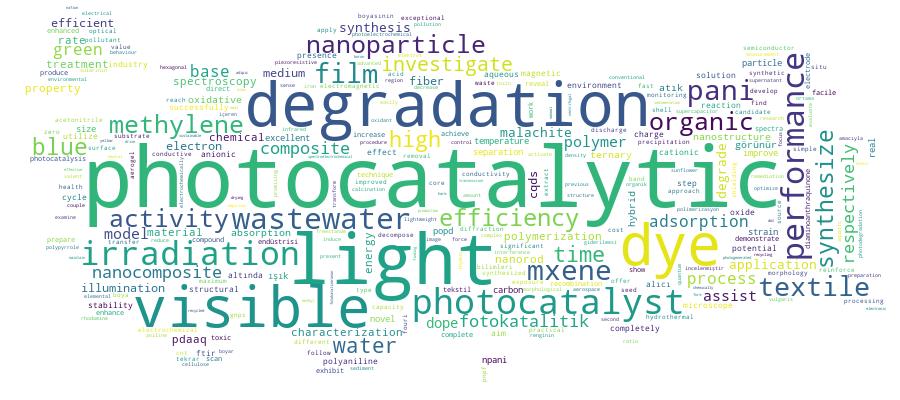
Competency Cloud